Issue of the Week: War
Published October 10, 2025
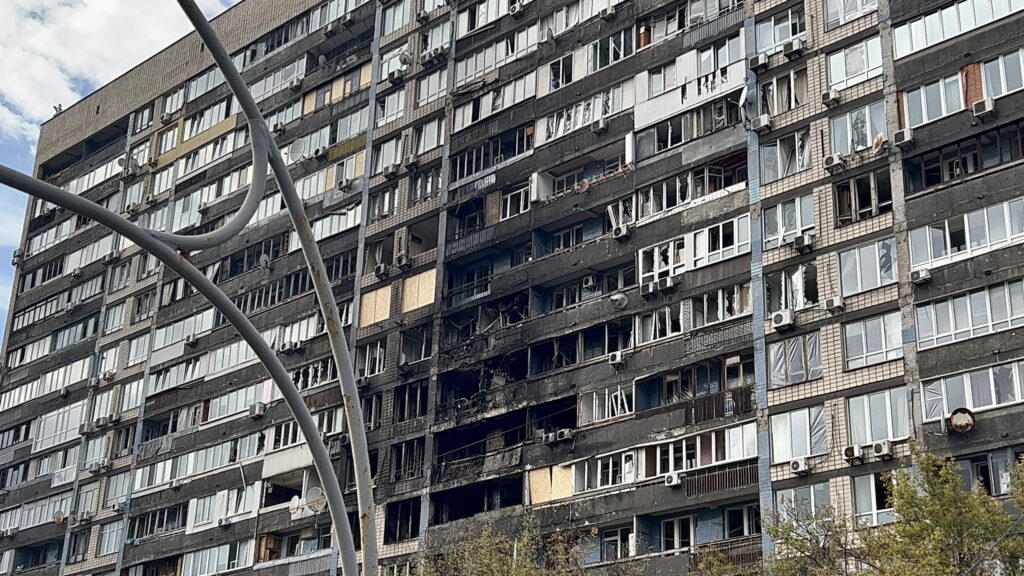
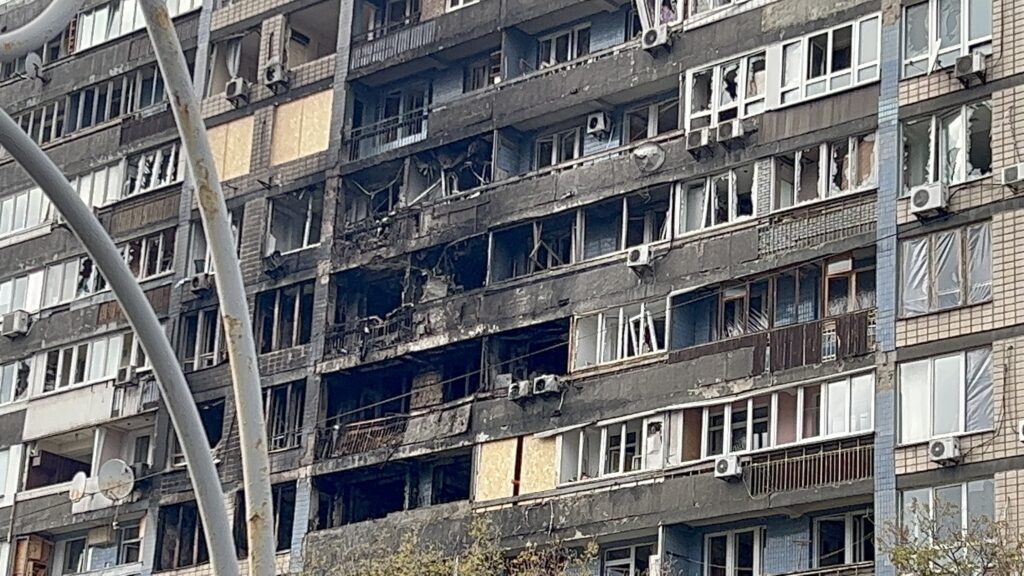
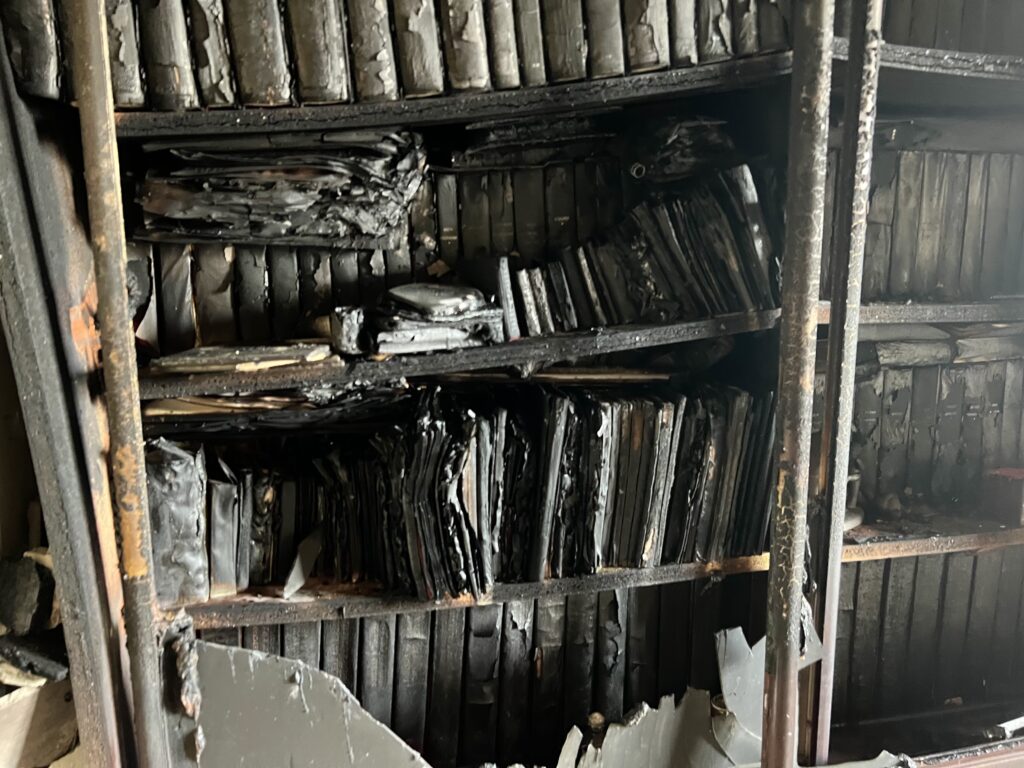
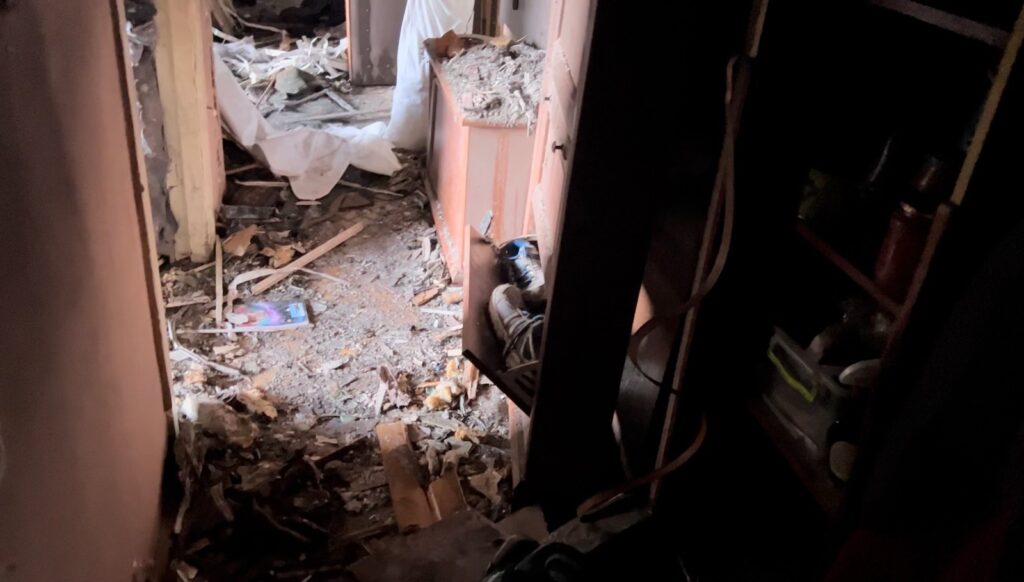
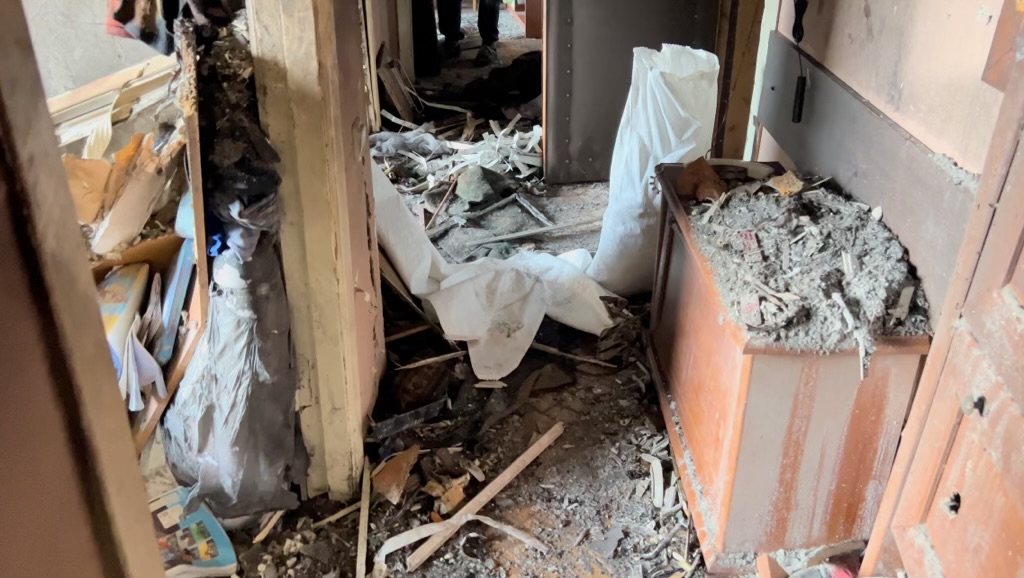
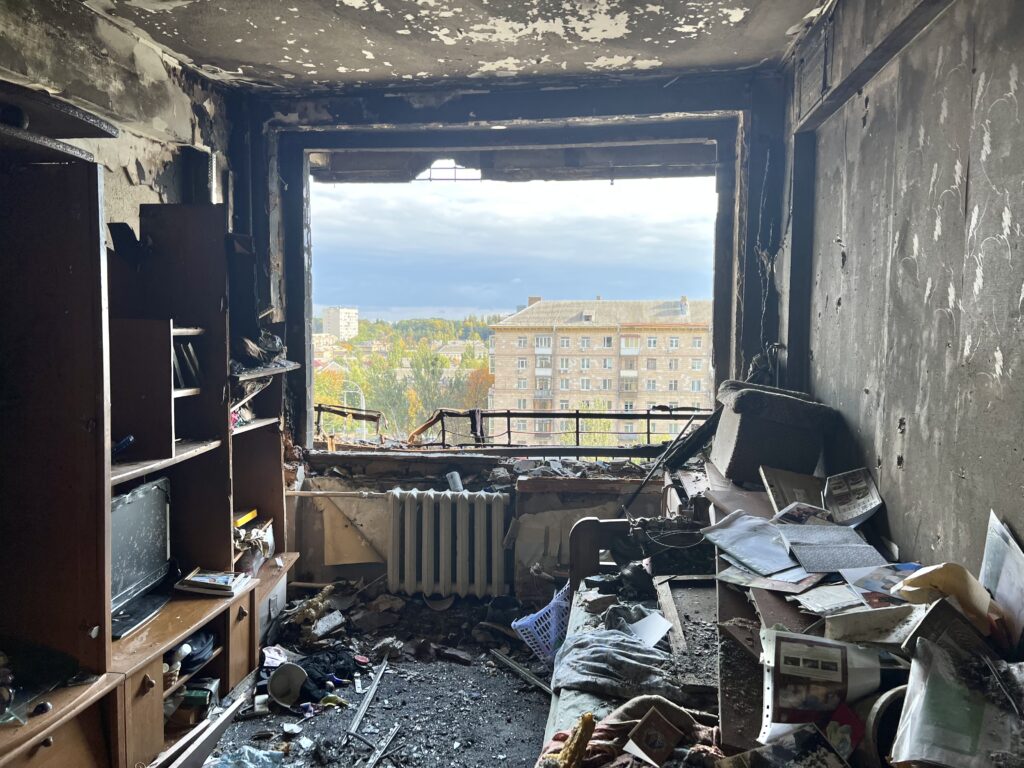
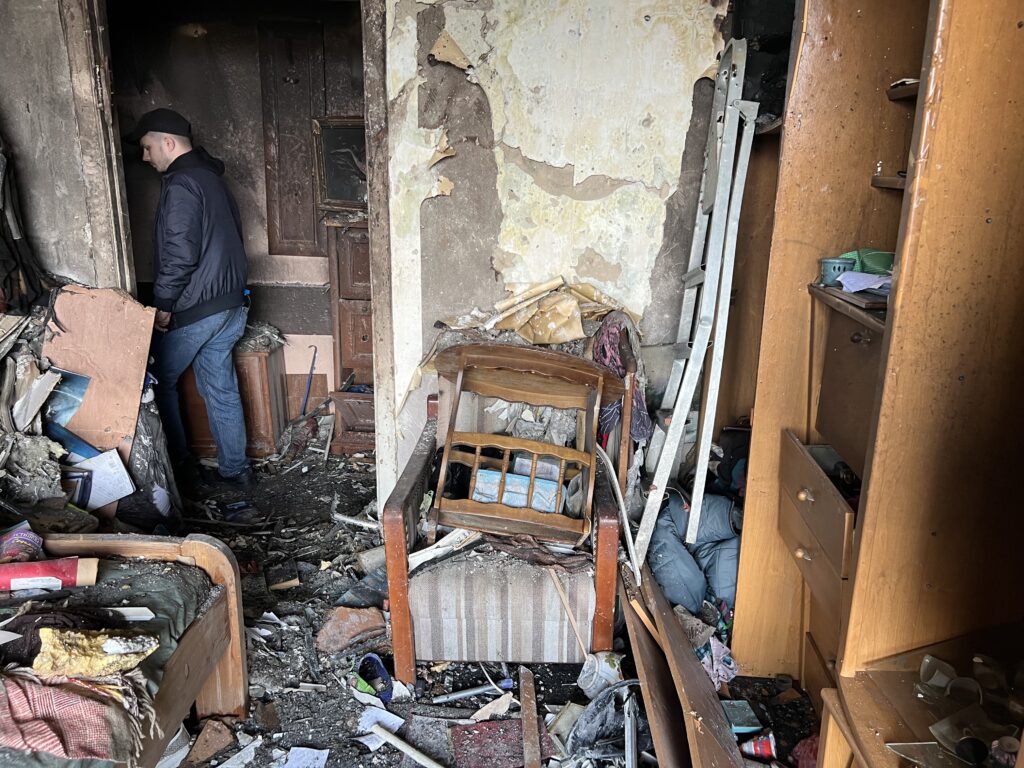
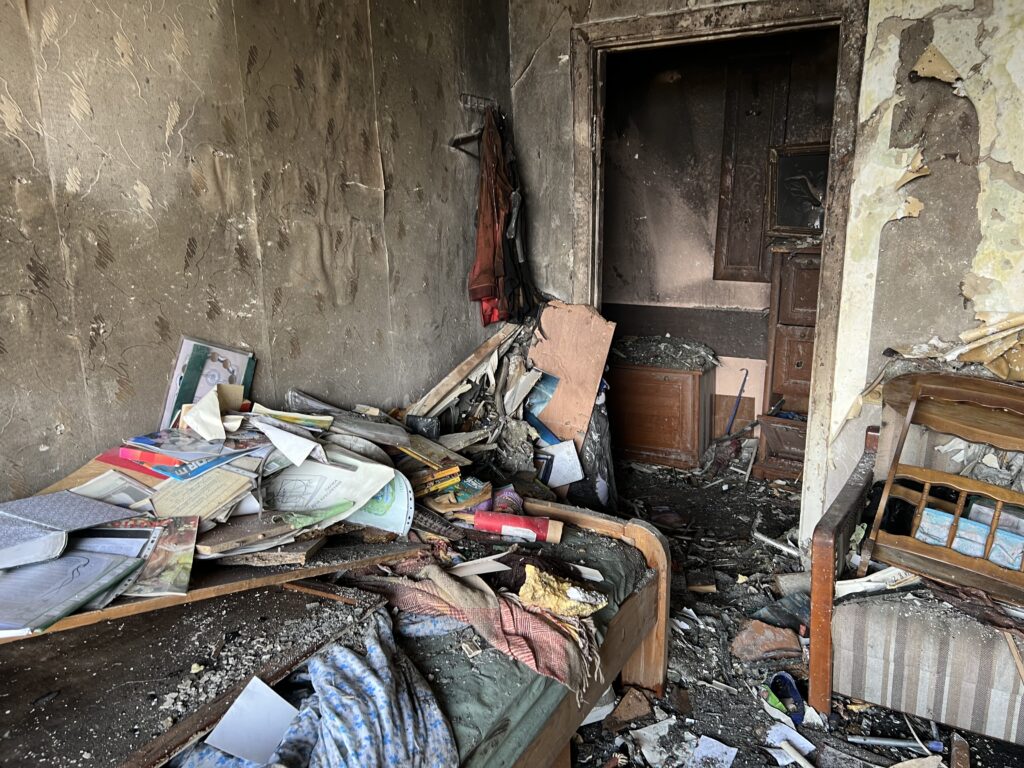
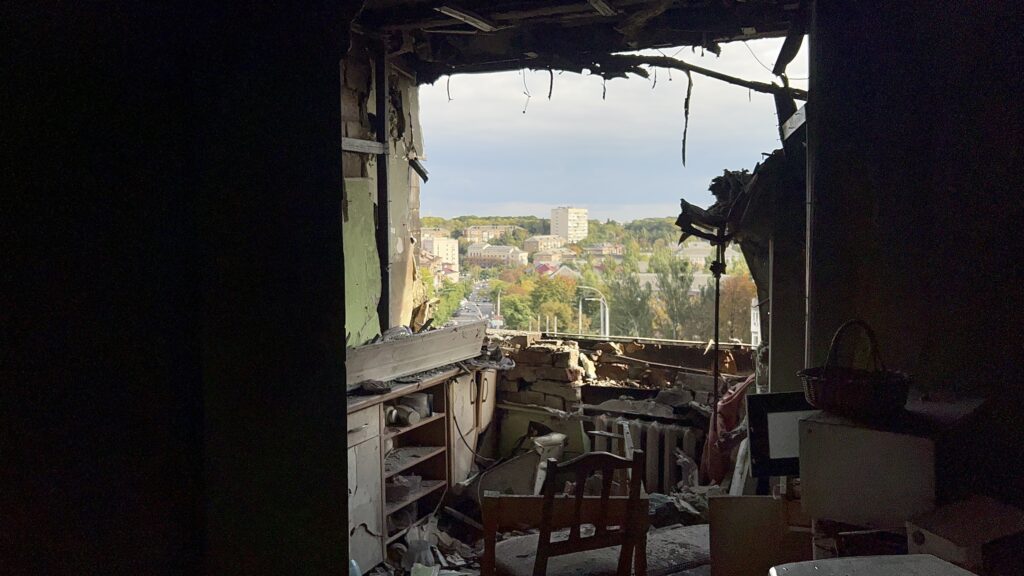
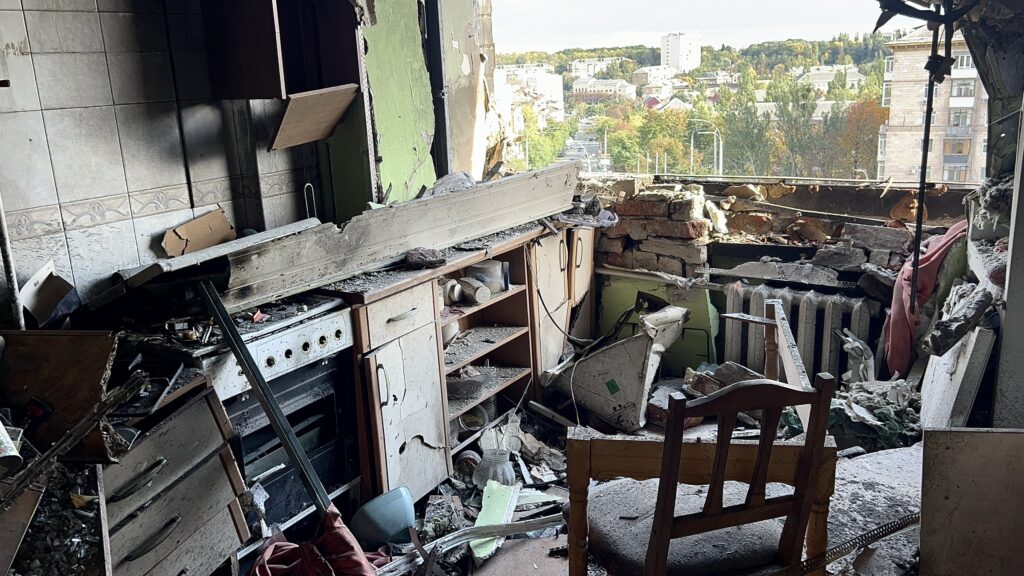
Kyiv apartment building hit by Russian drone and missile attack, October 10, 2025. (c) 2025 Planet Earth Foundation
Mercy for Kyiv is fleeting.
As we were about to end our tenth day in Kyiv, soon after midnight passed to begin our eleventh, the air raid sirens and subsequent “Increased air threat!” alerts blared, and both the app on our phones and the hotel intercom instructed to go to shelters.
We didn’t. Not right away.
We’d reached the point–after a week and a half of a journey starting on Defender Day, of seeing and hearing everything endured daily throughout Ukraine–where caution was not in support of our mission.
We were bystanders at the lever between light and dark in the global future, and in our view bystanders had no right to be there except to share the risk, bear witness and help keep the eyes of humanity from being averted.
Within seconds, we heard explosions.
We ran to the door at the balcony of a common living area and opened it, with camera already recording video.
As the door was opening, an explosion blinded us for a second and pushed us back slightly like an unexpected strong gust of wind. It lit up the buildings across from us as if it were day. The explosion seemed close, but it was unclear exactly where it had come from.
Then dark returned instantly after the light from the explosion subsided.
The power went out, for much or all of Kyiv. We kept taping and saw several more explosions over the horizon, while hearing others.
We decided that we’d witnessed enough, and headed for the shelter.
Hundreds of Russian drones and missiles hit Kyiv for hours.
After we returned to our rooms, alerts and the sounds of strikes would come and go all night and morning until dawn.
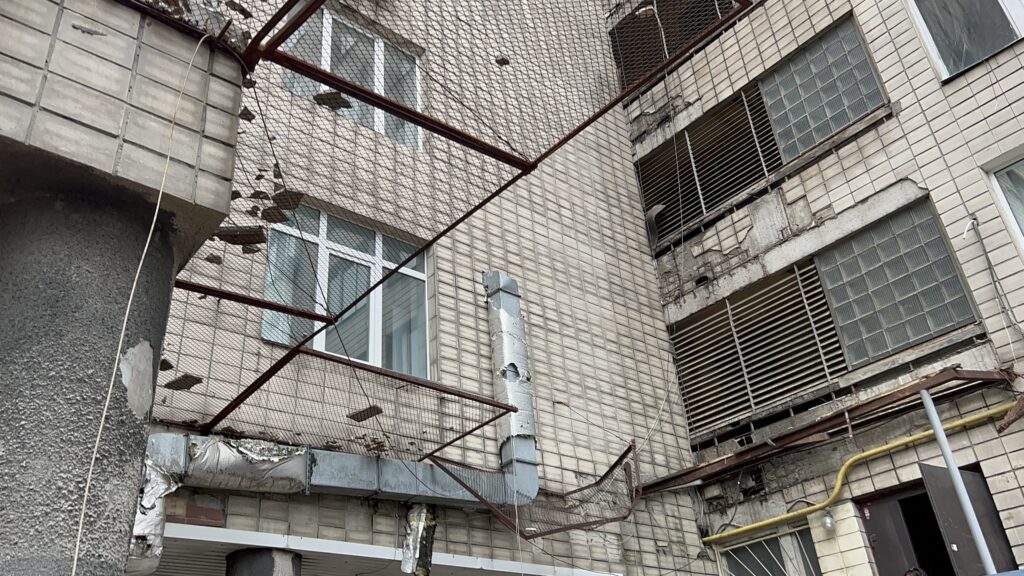
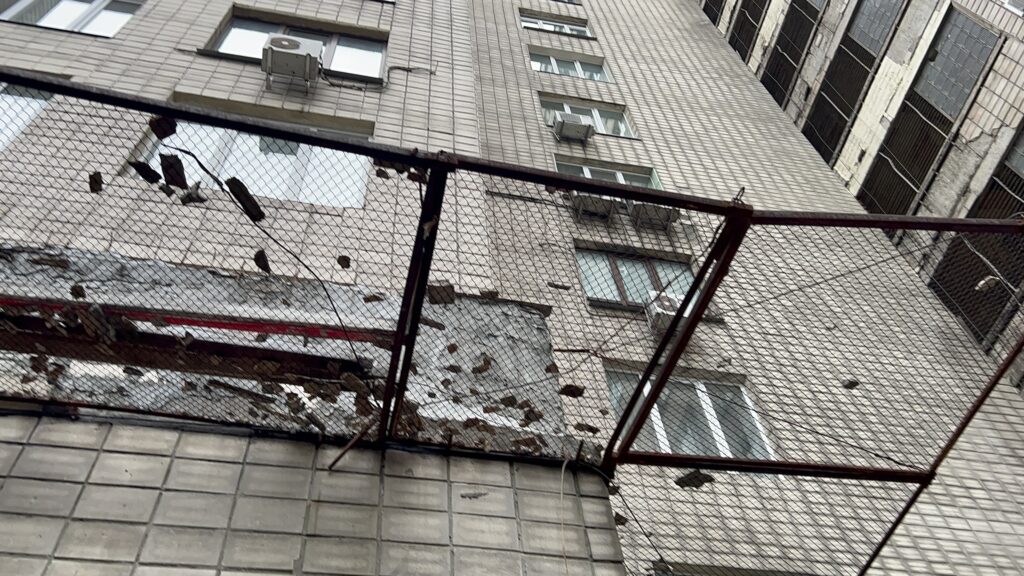
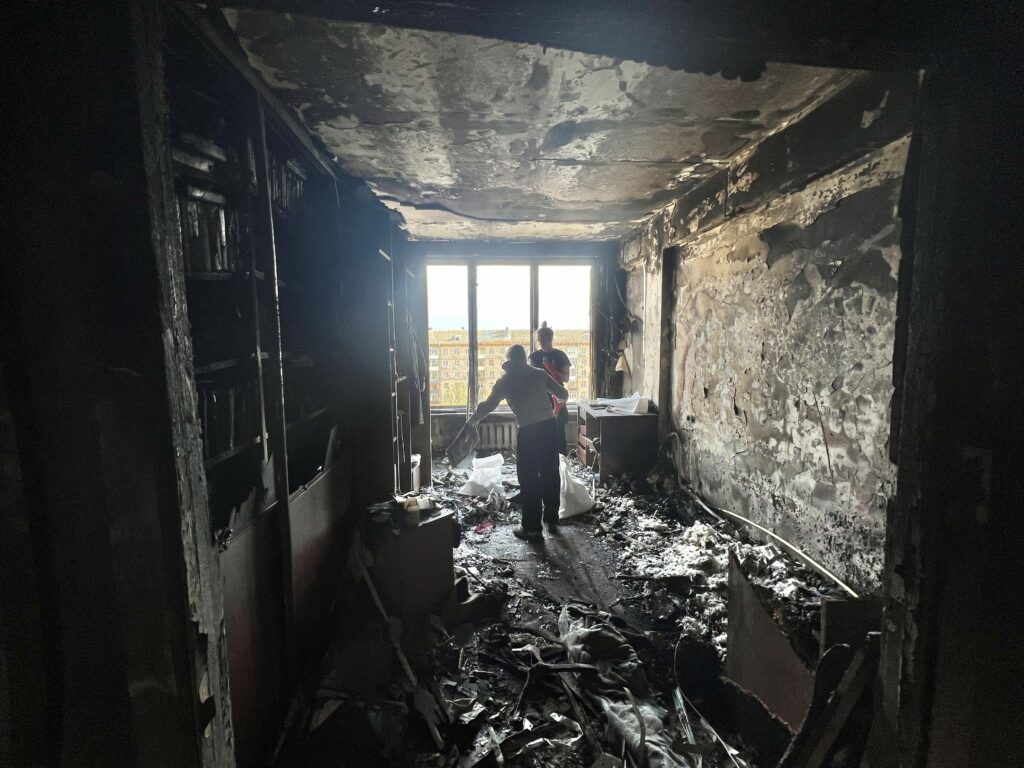
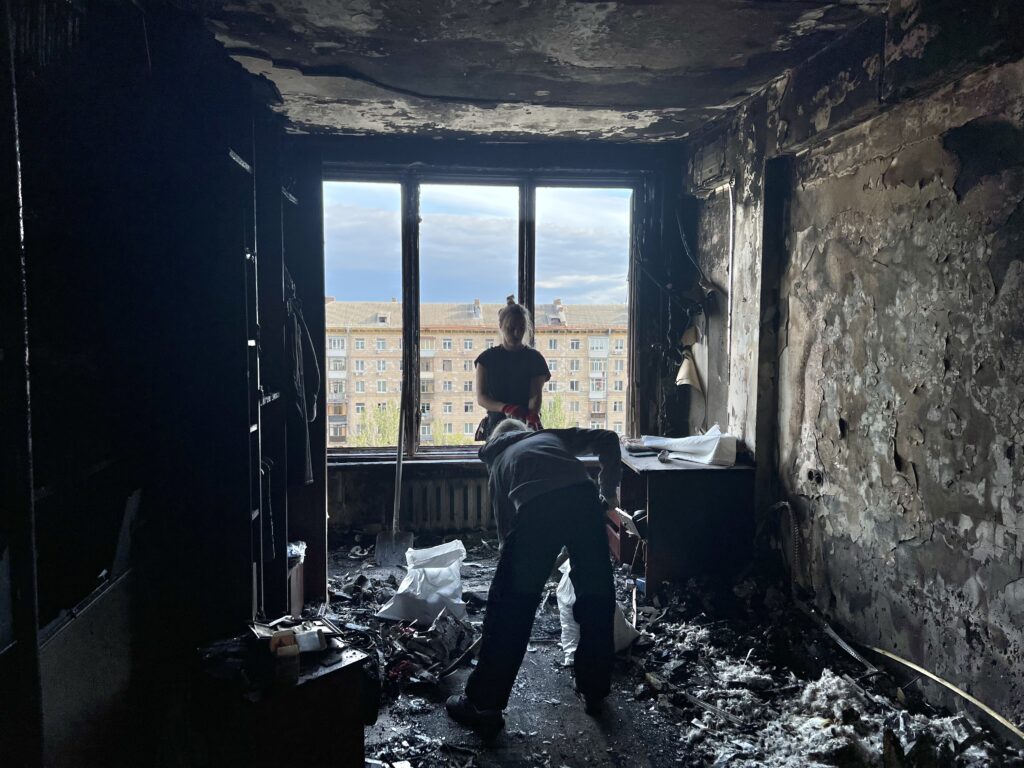
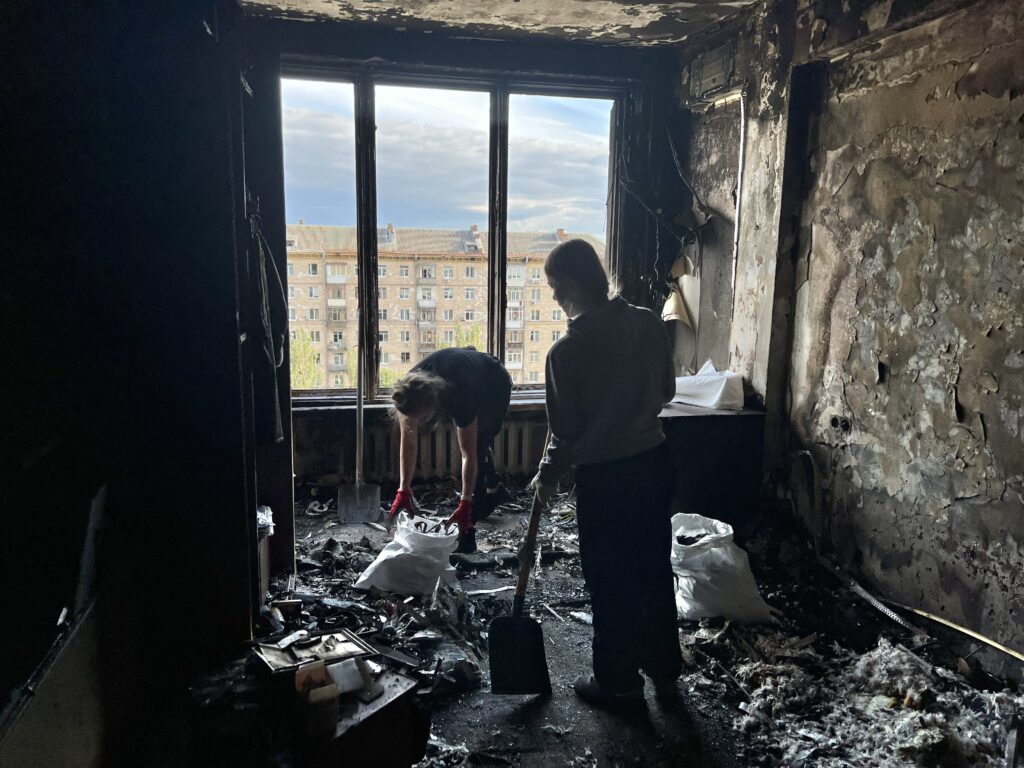
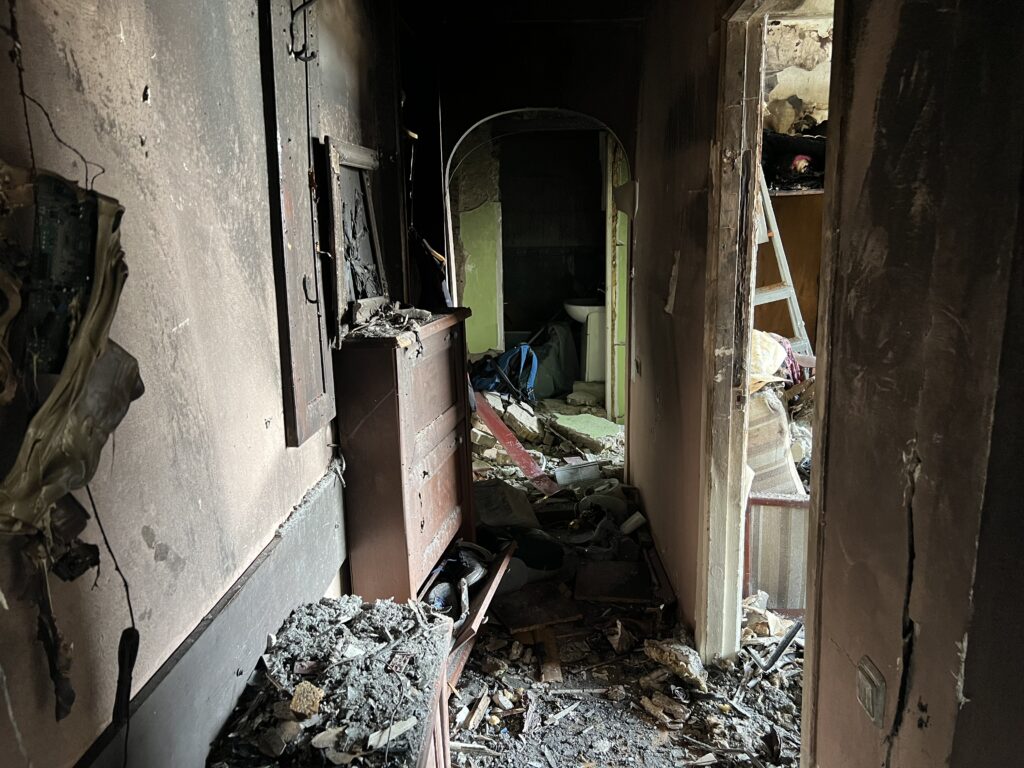
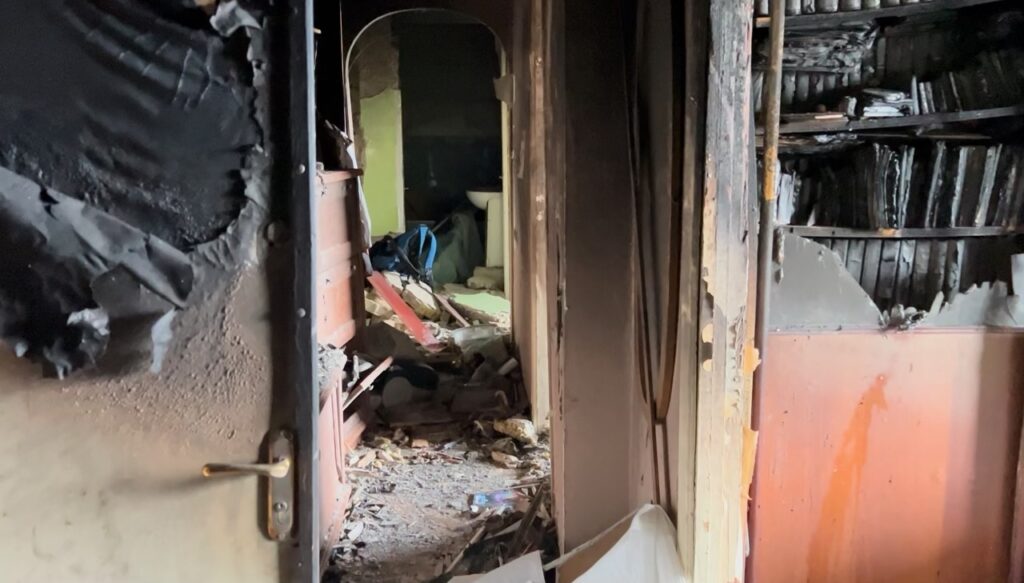
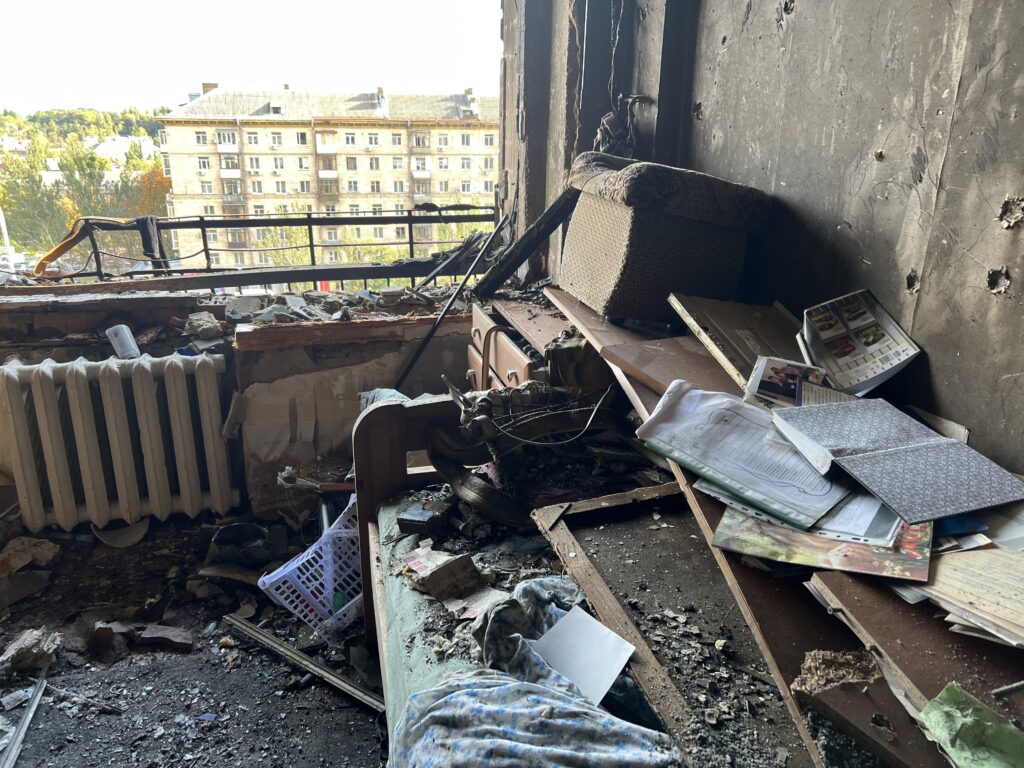
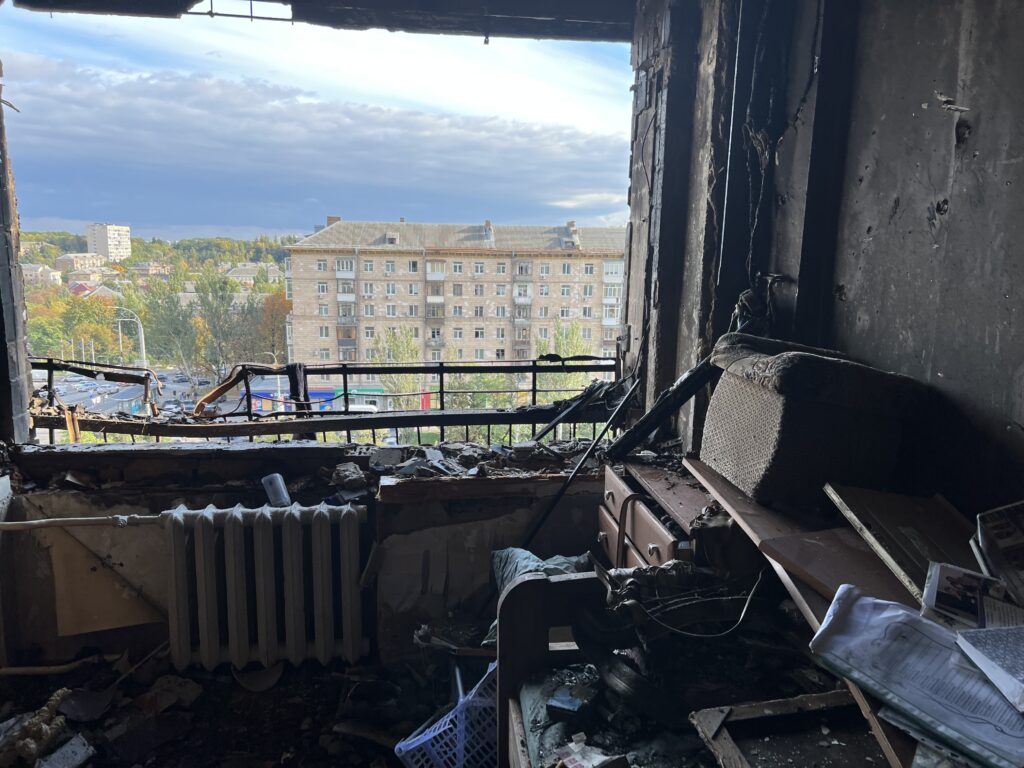
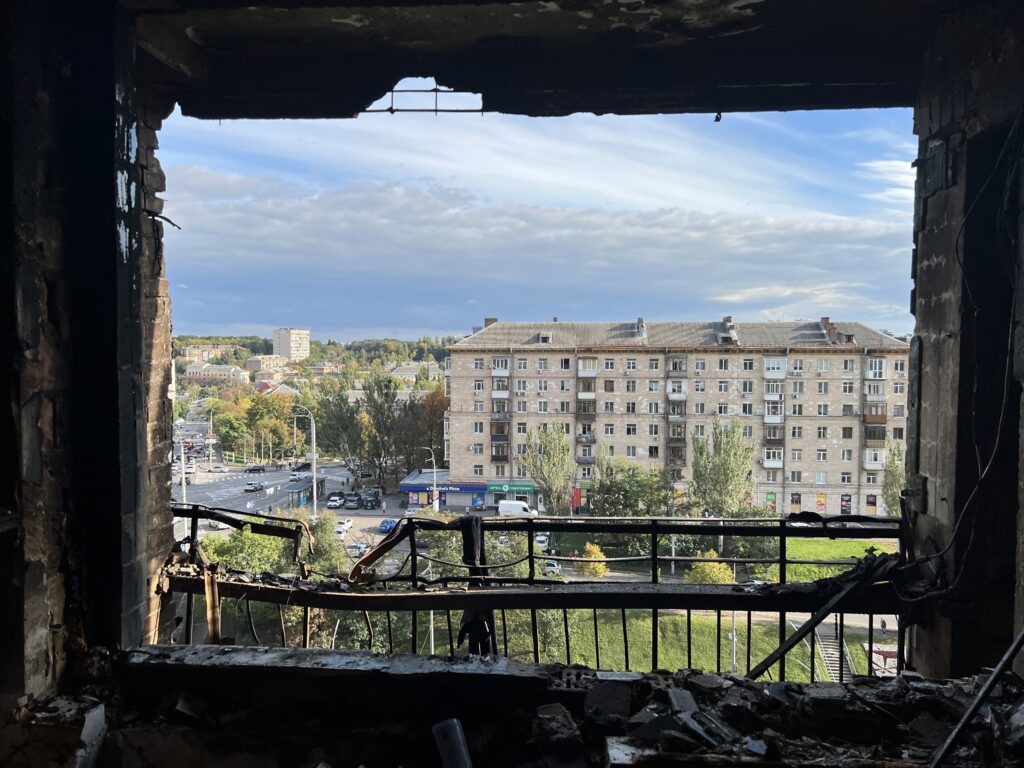
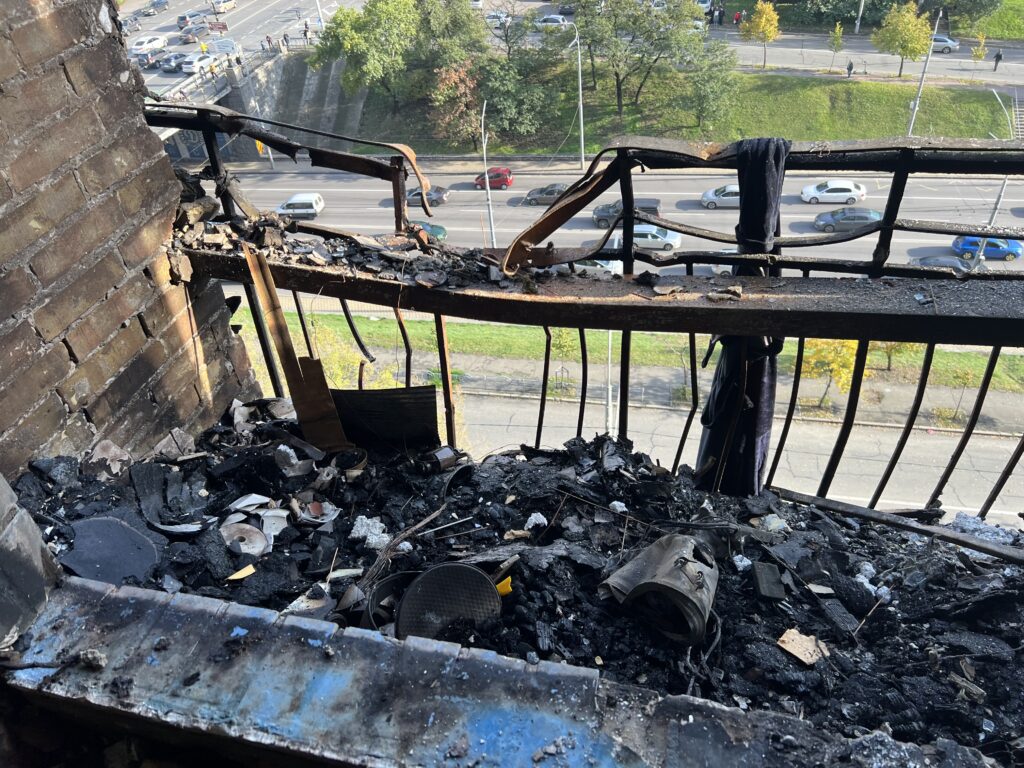
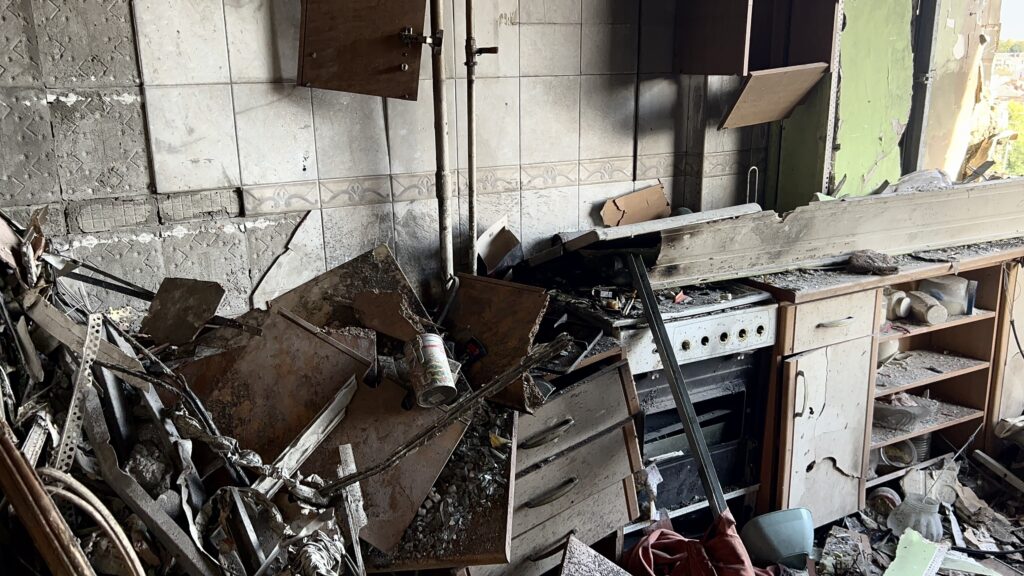
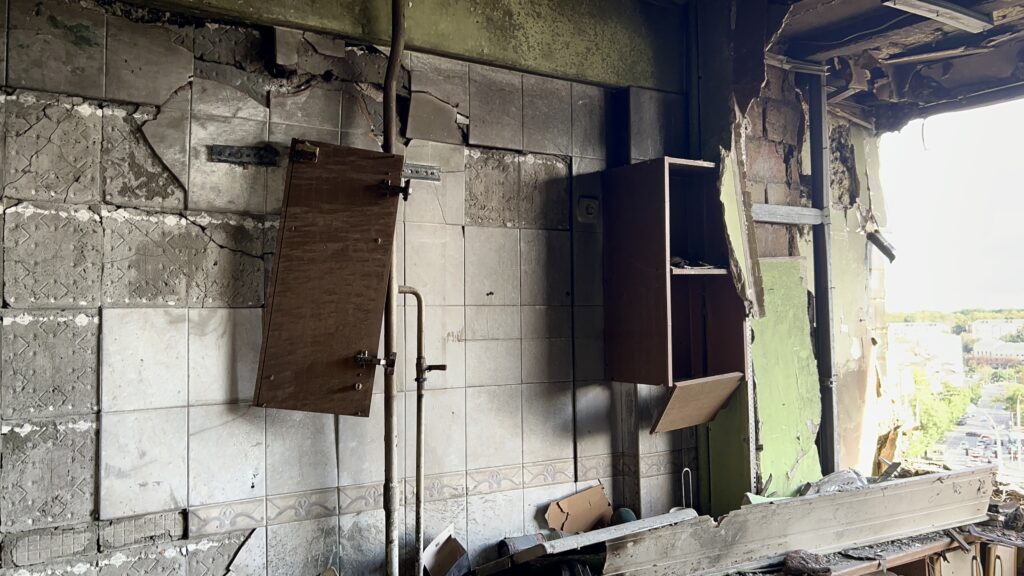
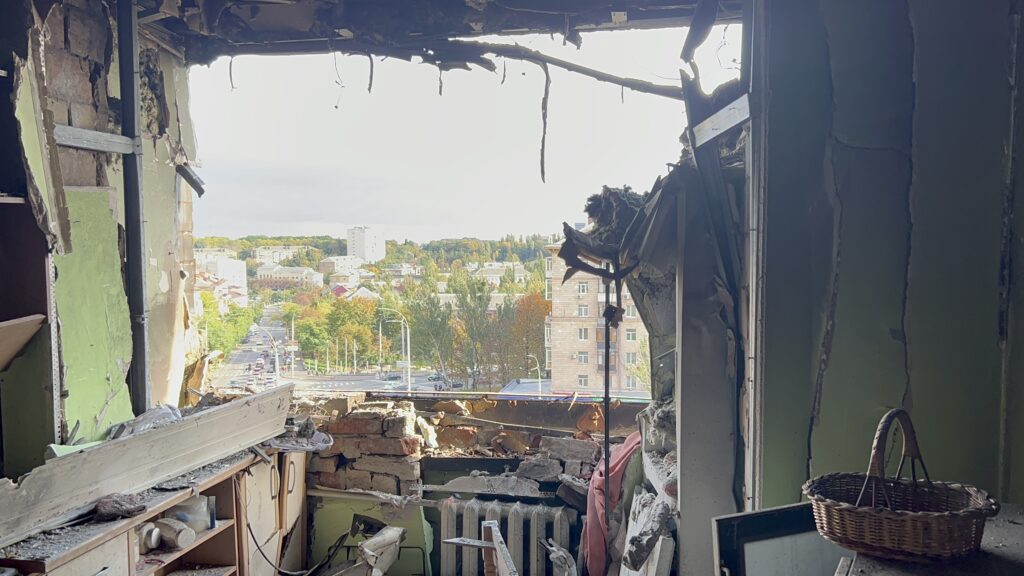
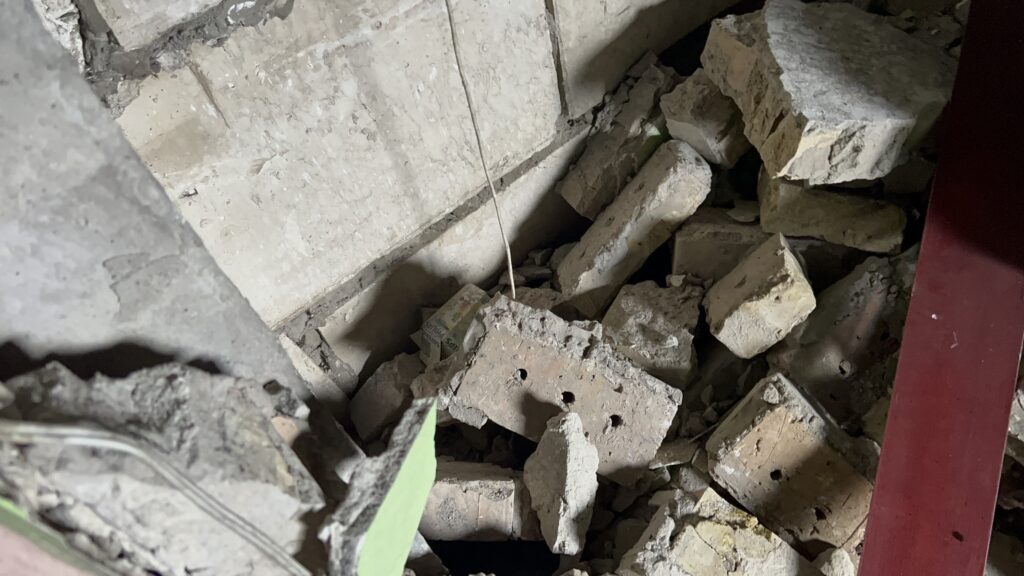
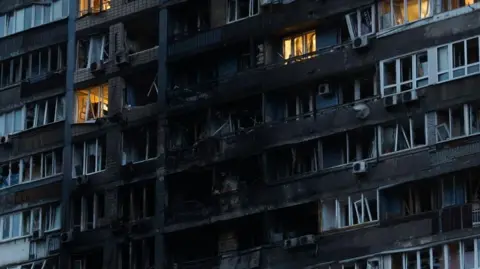
Among other targets, a power station was hit. The largest explosion, probably the one we saw and heard, created a hole in the center of a large civilian apartment building. A large fire ensued immediately. First responders got to it and put it out as soon as it could be.
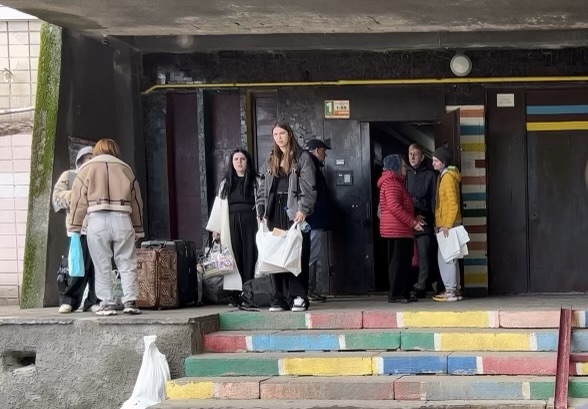
Numerous occupants were wounded. Miraculously no one died–not there (other sites in Ukraine were hit, at least one child died and many were wounded, but between sheltering, self-sheltering techinques and luck, it was a relatively low casualty night—and killing and terrorizing civilians is the intent of the Russian strikes).
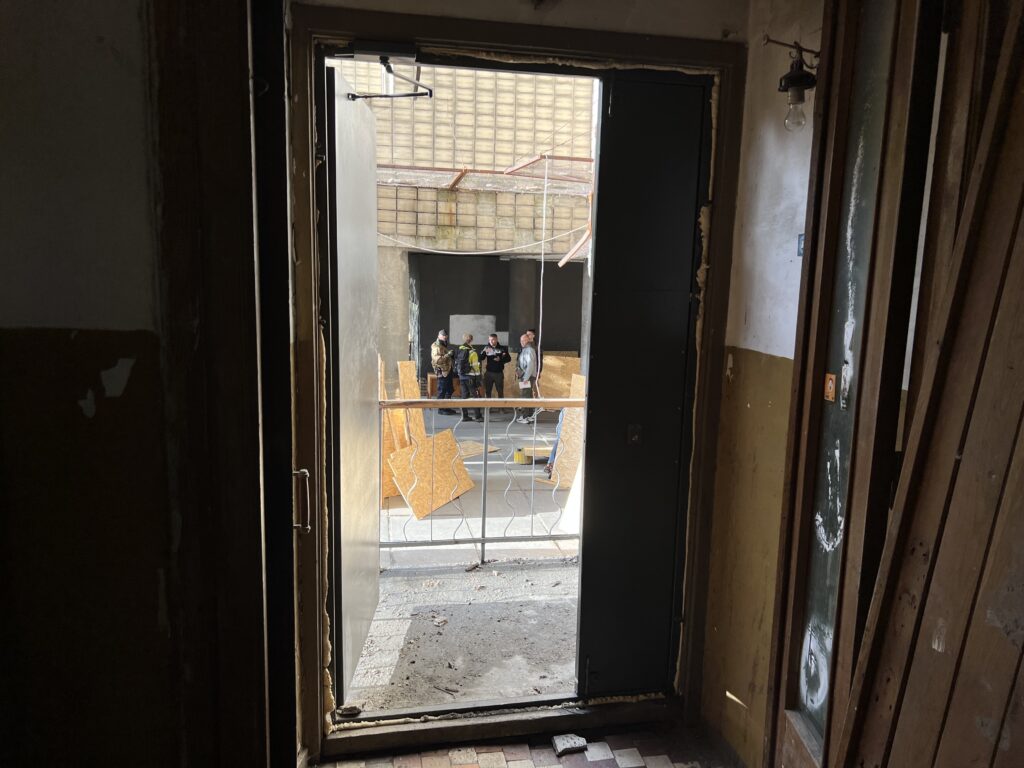
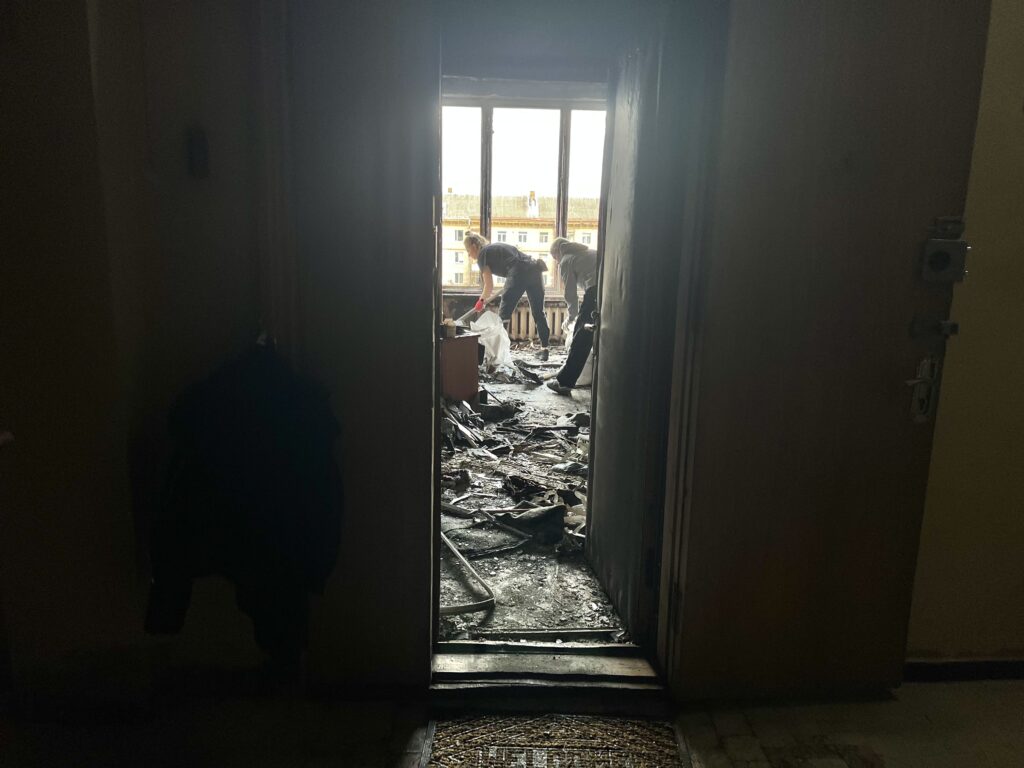
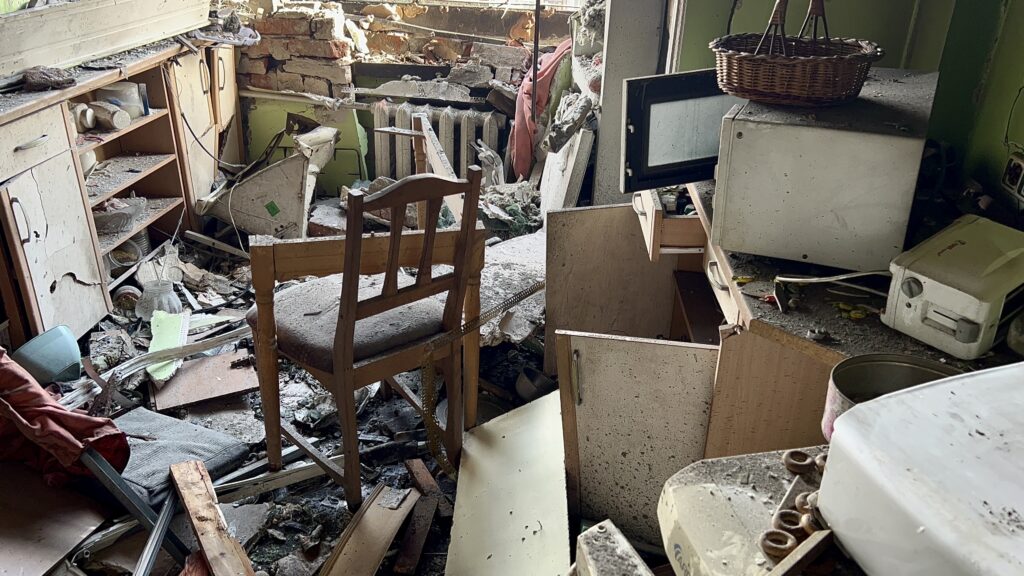
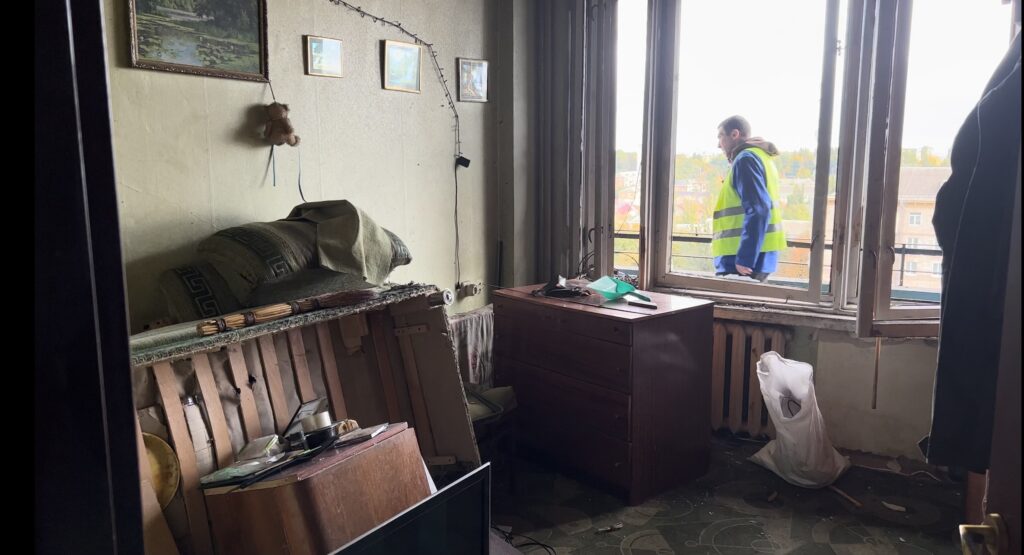
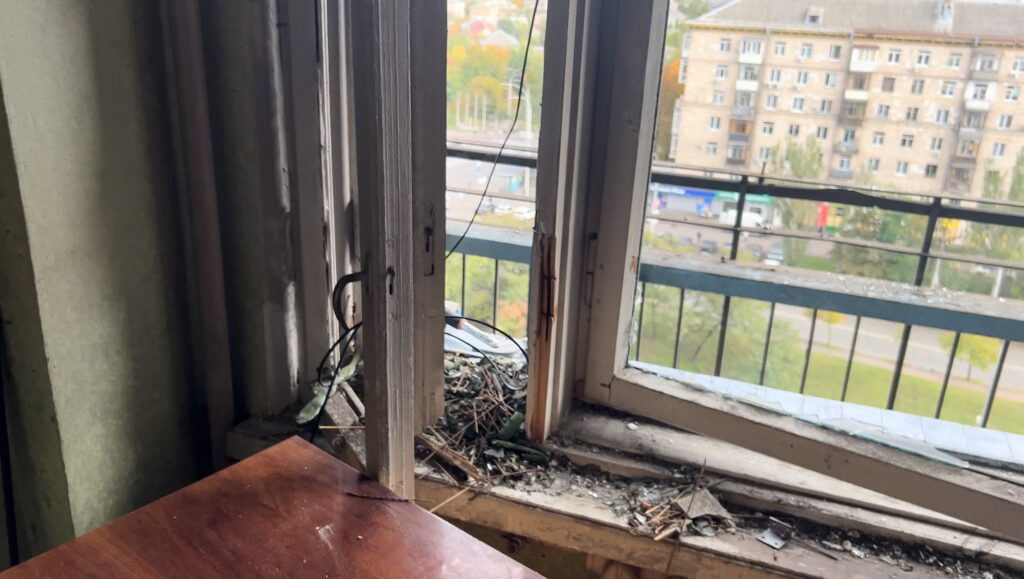
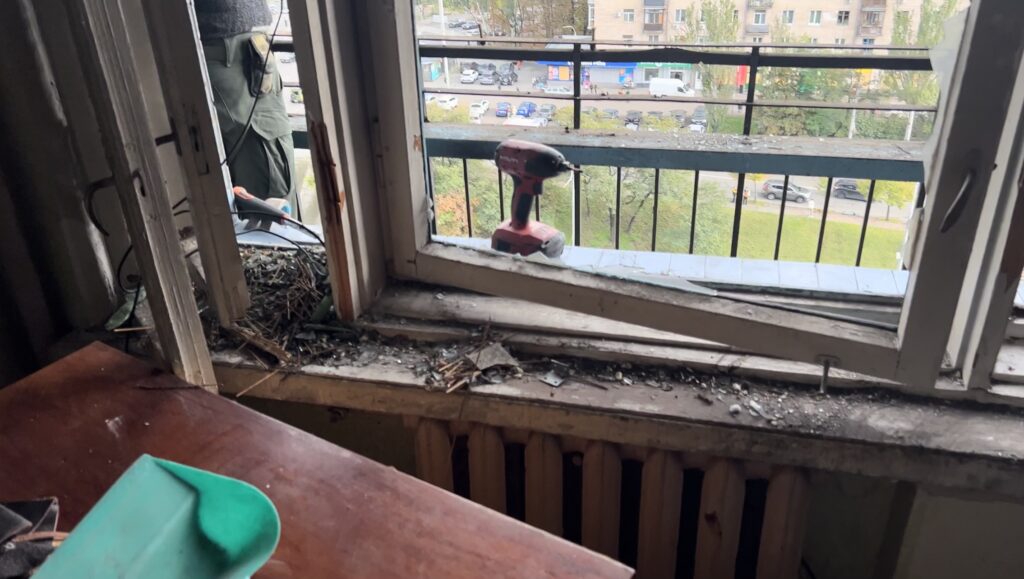
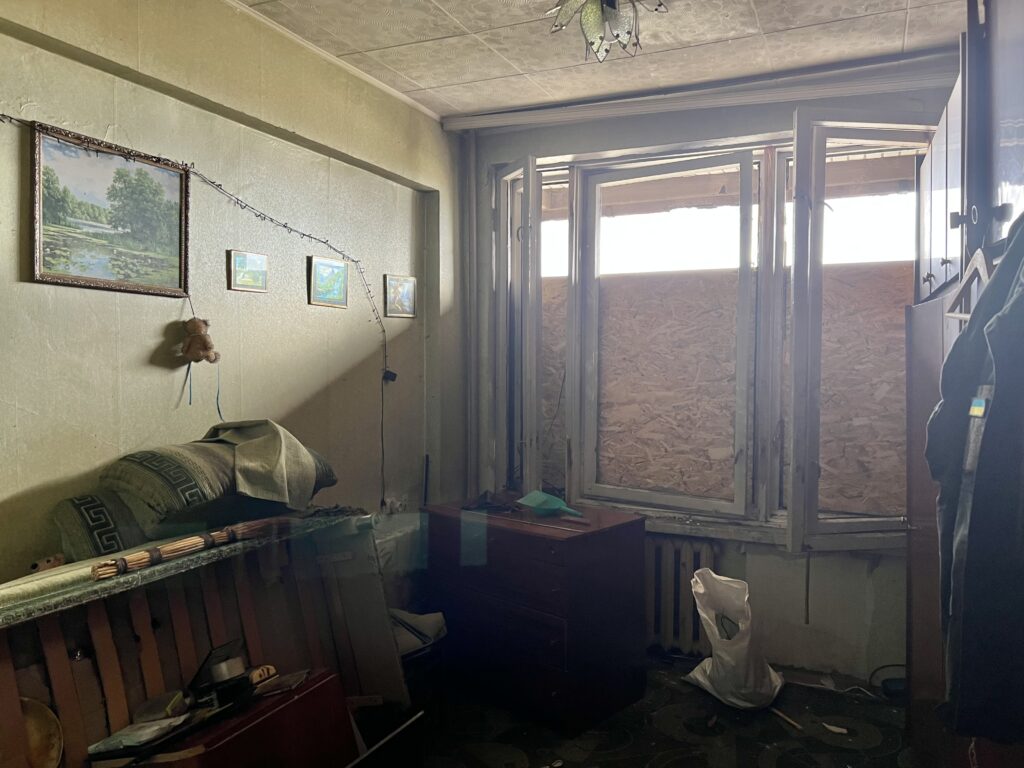
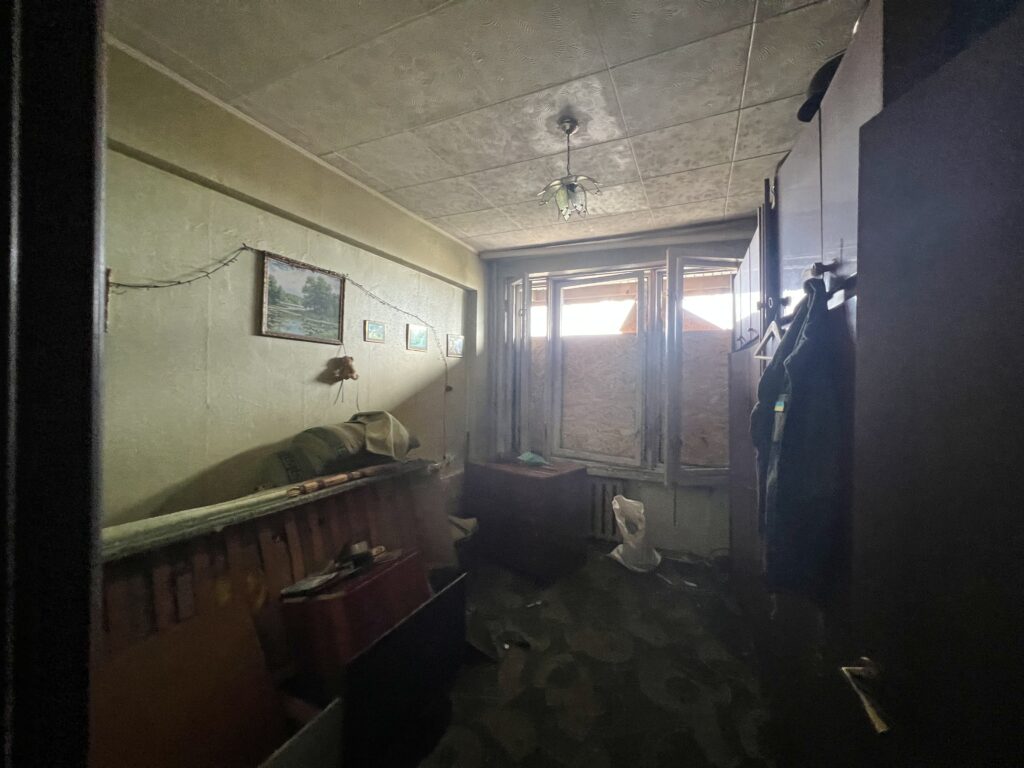
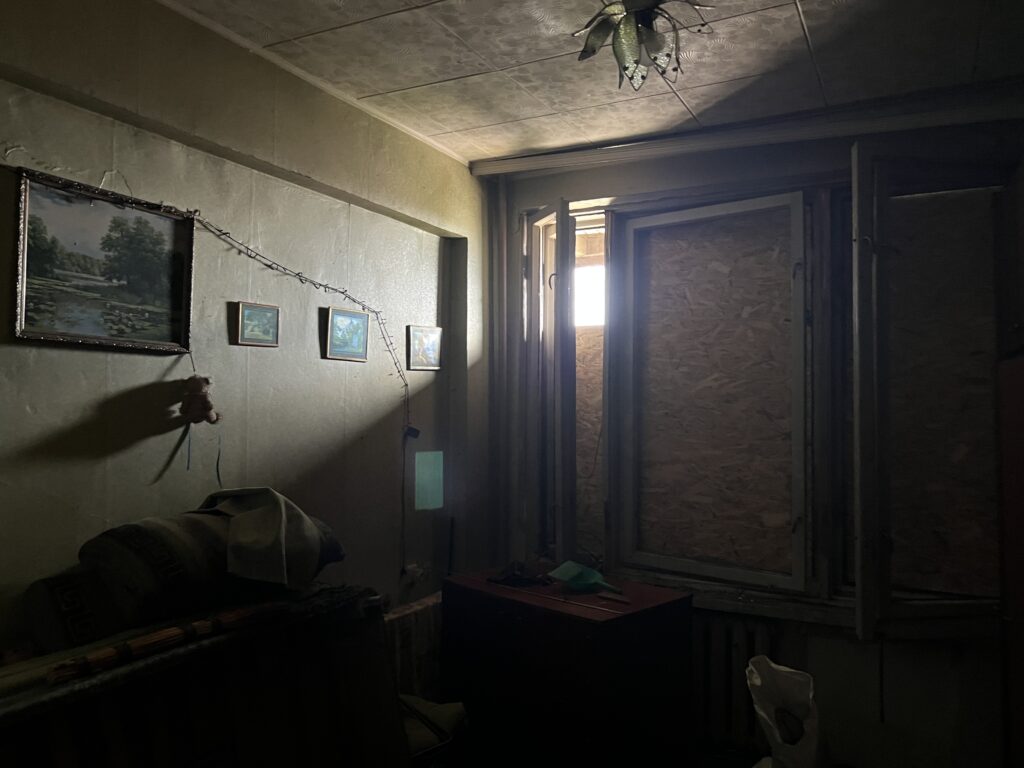
Volunteers were there to help the people in the building, remove and clean up the wreckage, and put wood slabs in the windows (a common site in Kyiv and throughout Ukraine as a result of Russian drone and missile strikes), as soon as the fire was out. Volunteers do this 24 hours a day, and have done so every day, since the full scale Russian invasion began on February 24, 2022.
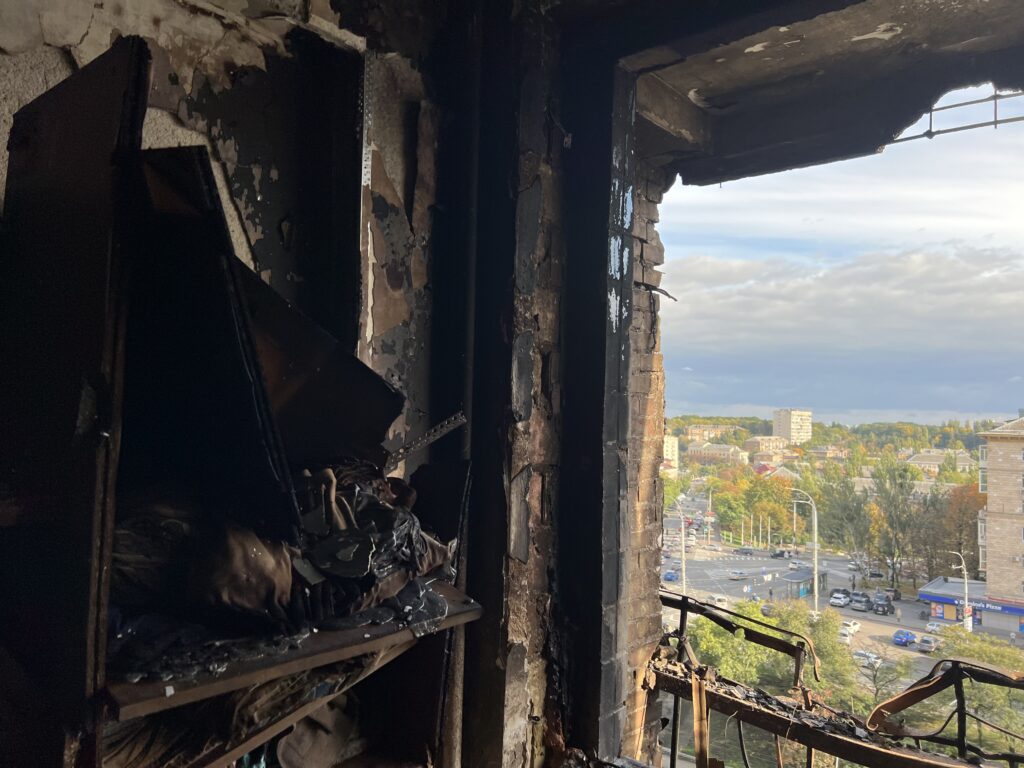
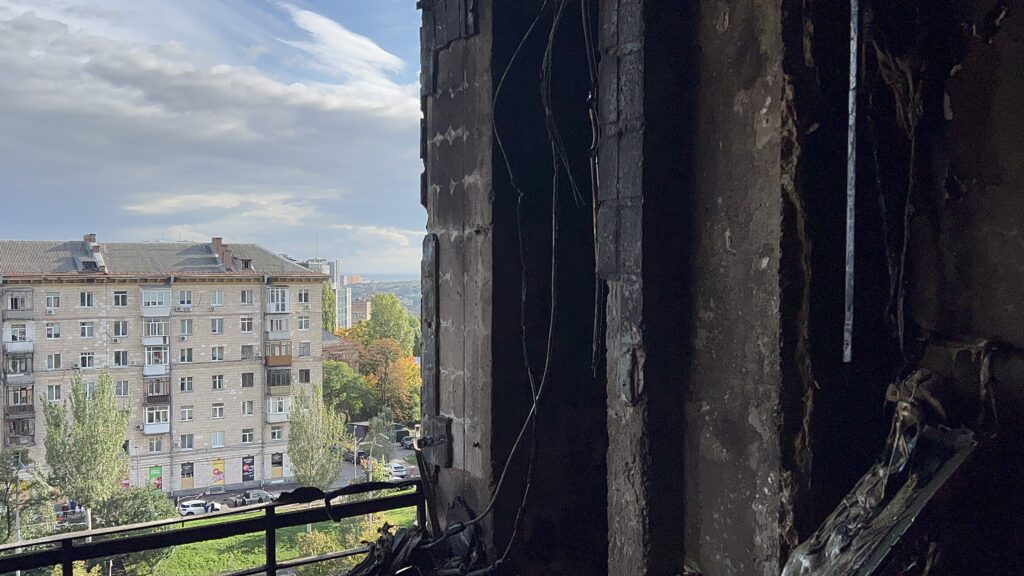
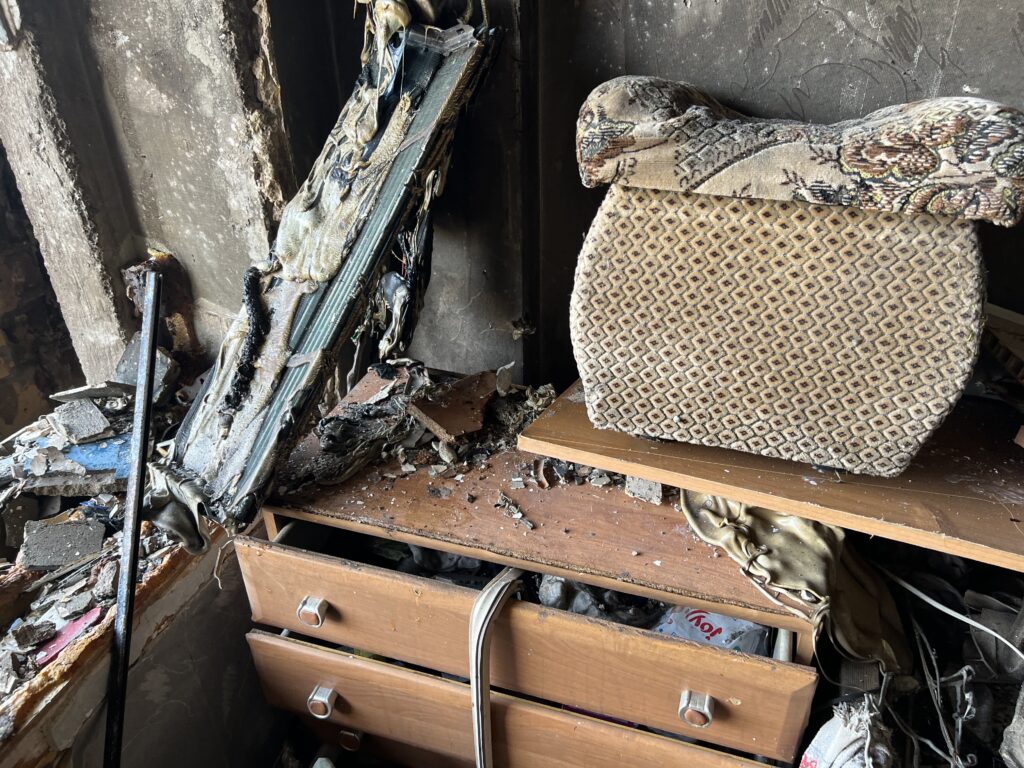
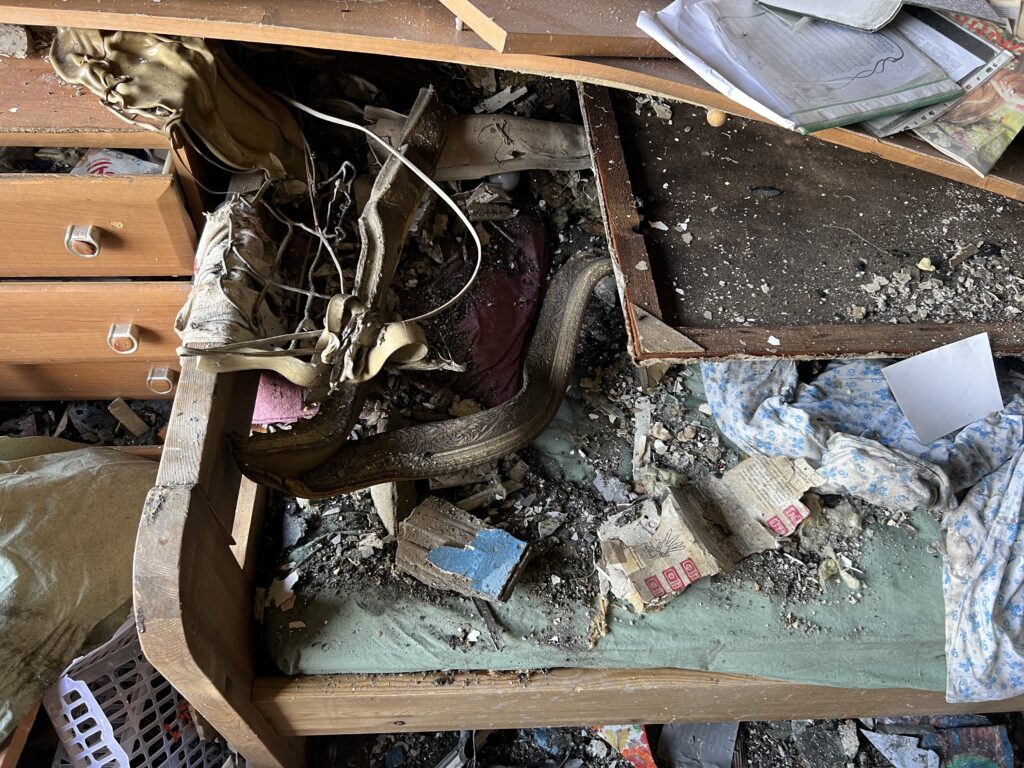
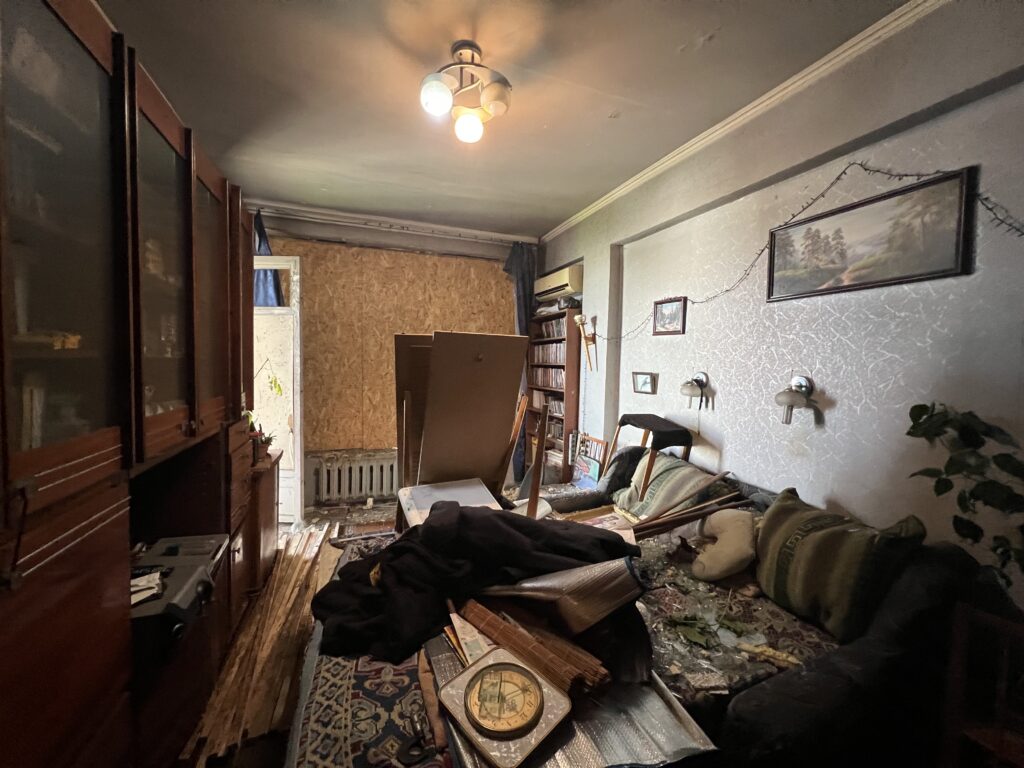
This apartment building was the main site shown in media reports throughout the world (see CNN, BBC and The New York Times below) of the strikes in Kyiv this morning. We went there and were guided by a volunteer leader through the damage inside the building. We saw no other press coverage of this.
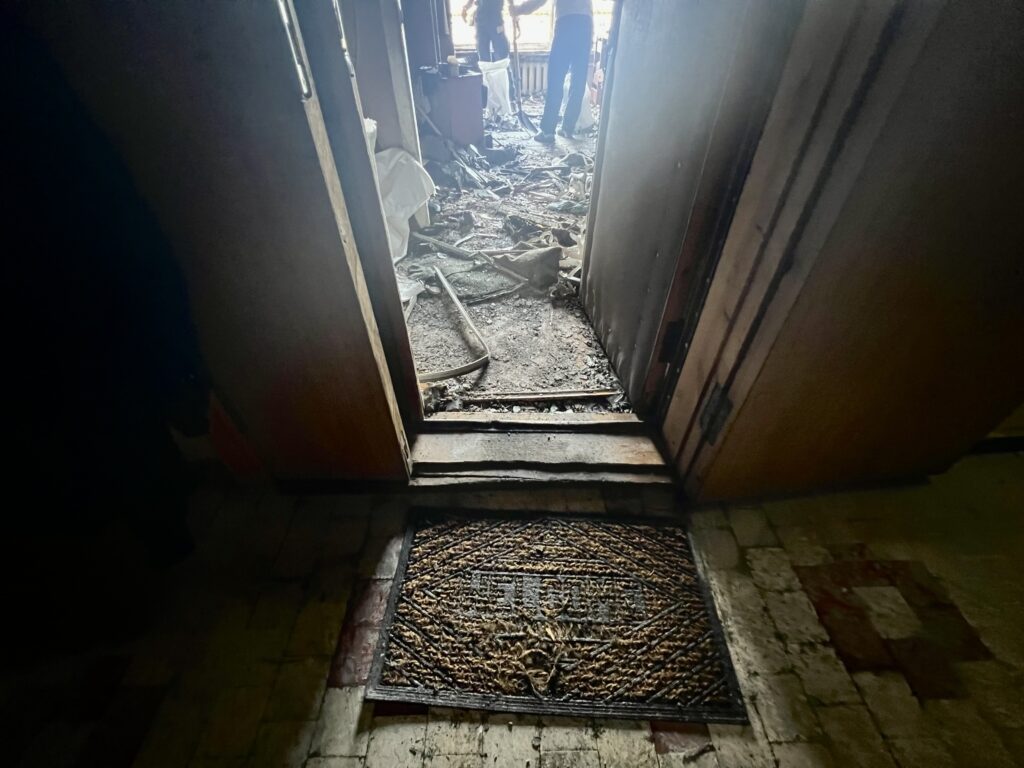
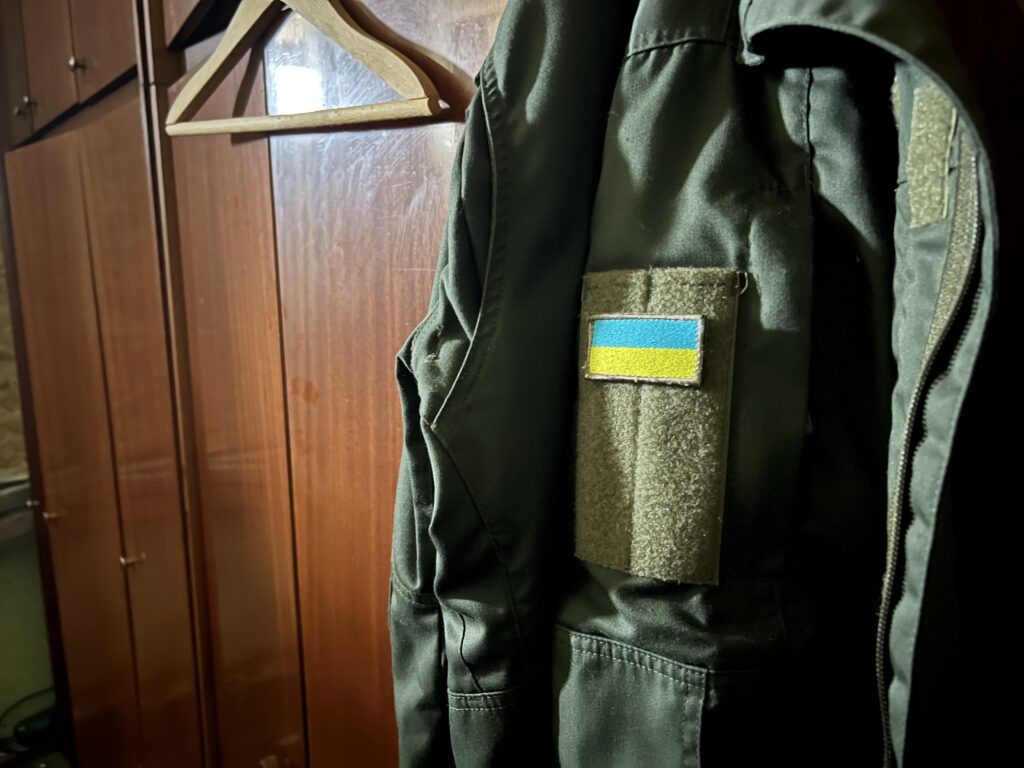
Blood on a door, the smell of burnt wood, metal and concrete almost unbearable to breathe, the apartments destroyed, and the belongings of inhabitants burned up or part-burned, the pictures and symbols of their lives and lifetimes strewn about heartbreakingly.
The following photos and video screen shots from us tell the story.
The full story of our journey and experiences in Ukraine will come soon.
Russian drone and missile attack on civilian apartment building, Kyiv, October 10, 2025:


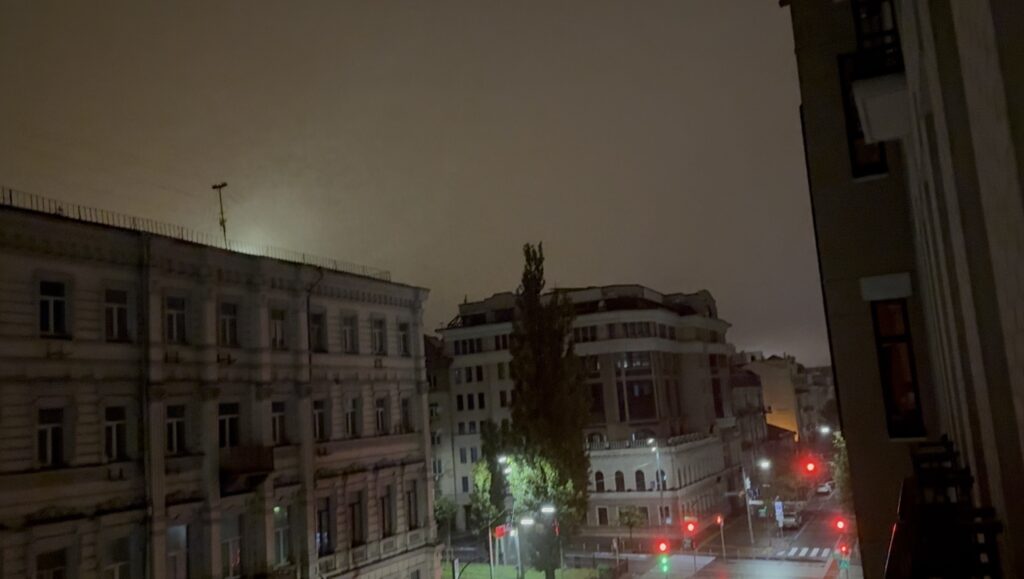
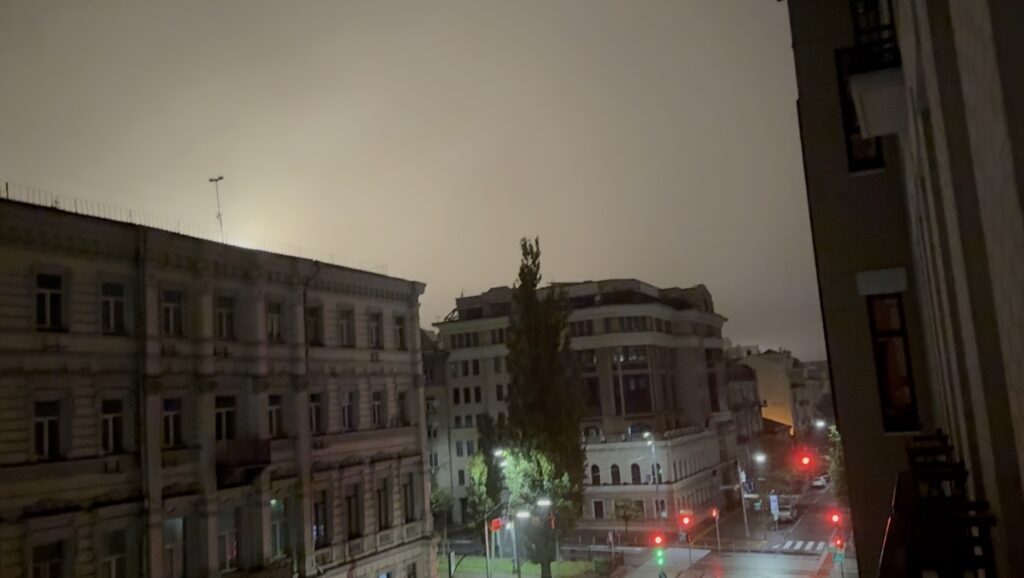
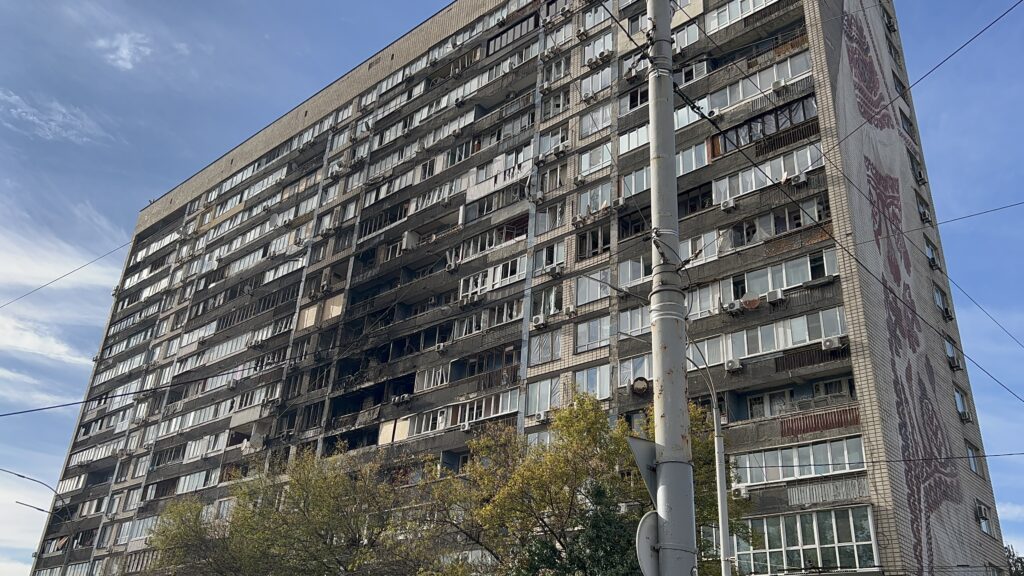

















All images (c) 2025 Planet Earth Foundation, all rights reserved.
. . .
“Ukraine says ‘massive’ Russian attack targeted energy infrastructure”, CNN
By Victoria Butenko, Rhea Mogul and Kosta Gak
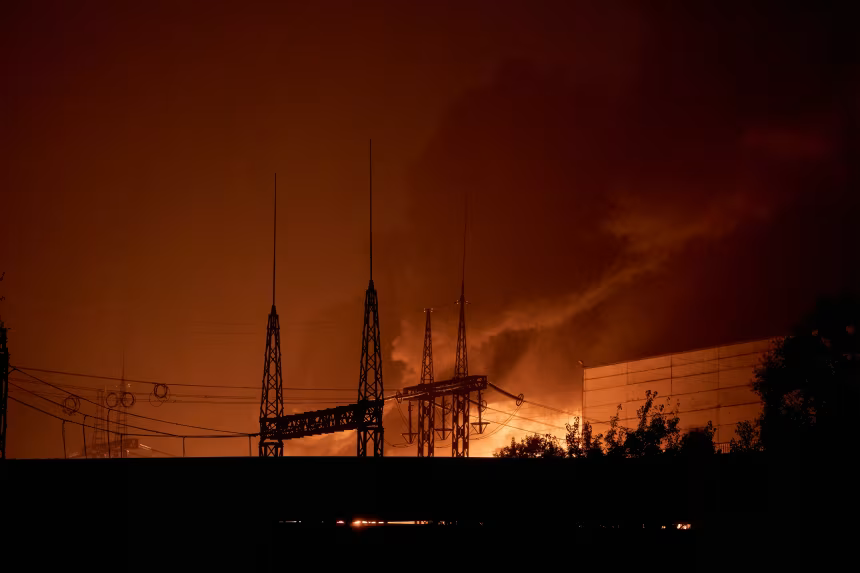
Firefighters battle flames at a thermal power plant following a series of explosions in Kyiv, Ukraine, on October 10, 2025. Kostiantyn Liberov/Libkos/Getty ImagesKyiv —
The Kremlin appears again to be using a tactic deployed in previous years, depriving Ukrainians of power and heat ahead of the bitter winter months. Russia started attacking Ukraine’s energy infrastructure in late September, according to official reports and CNN’s assessment.
The attacks have been almost daily since then, with targets including energy generating facilities, including gas production and distribution.
Russia’s Ministry of Defense said in a Telegram statement Friday that it had launched a “massive” strike targeting Ukraine’s energy infrastructure, in what it said was a response to “the terrorist attacks by the Kyiv regime on civilian targets on Russian territory.”
Ukrainian President Volodymyr Zelensky called Friday’s strike “a cynical and calculated attack, with more than 450 drones and over 30 missiles targeting everything that sustains normal life, everything the Russians want to deprive us of.”
“It is precisely the civilian and energy infrastructure that is the main target of Russia’s strikes ahead of the heating season,” he added.
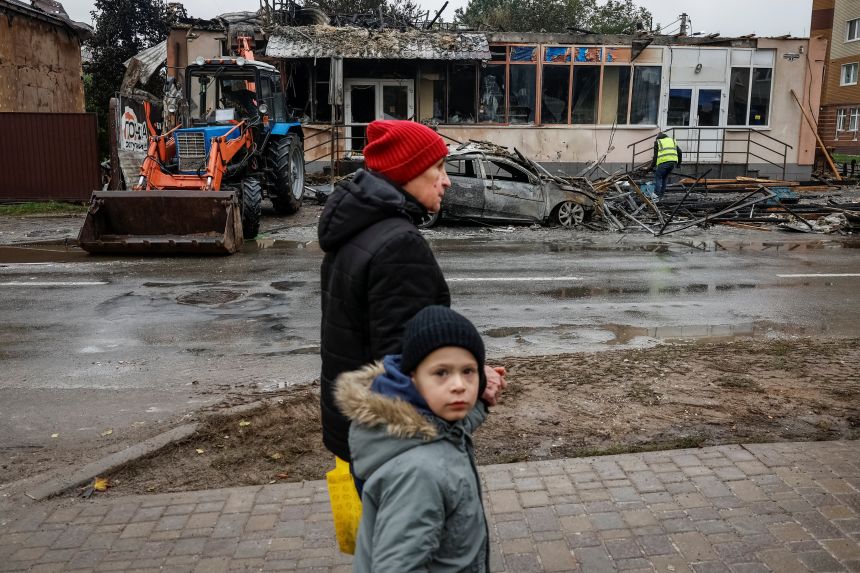
People pass buildings damaged during a Russian drone and missile attack in the town of Brovary, Kyiv region, on Friday. Alina Smutko/Reuters
It is Russia’s “goal to leave us in darkness, without water and heat,” said the Kyiv region’s governor, Mykola Kalashnik, adding that about 28,000 families in the Brovary and Boryspil districts were without power.
Power outages also affected more than 16,500 households and 800 businesses in the Poltava region, its governor Volodymyr Kogut said.
A 7-year-old boy was killed in a strike on the southeastern city of Zaporizhzhia, and dozens more injured, according to foreign minister Andriy Sybiha.
Local authorities say at least 33 people have been injured overall across the Cherkasy, Kyiv, Dnipro and Zaporizhzhia regions.
“In Kyiv, Kharkiv, Poltava, Zaporizhzhia, Dnipro, and other regions, many people remain without power following Russian strikes on civilian energy objects,” Sybiha said.
Workers were taking “all necessary measures to minimize the negative consequences,” Ukraine’s energy minister Svitlana Grynchuk said in a statement Friday.
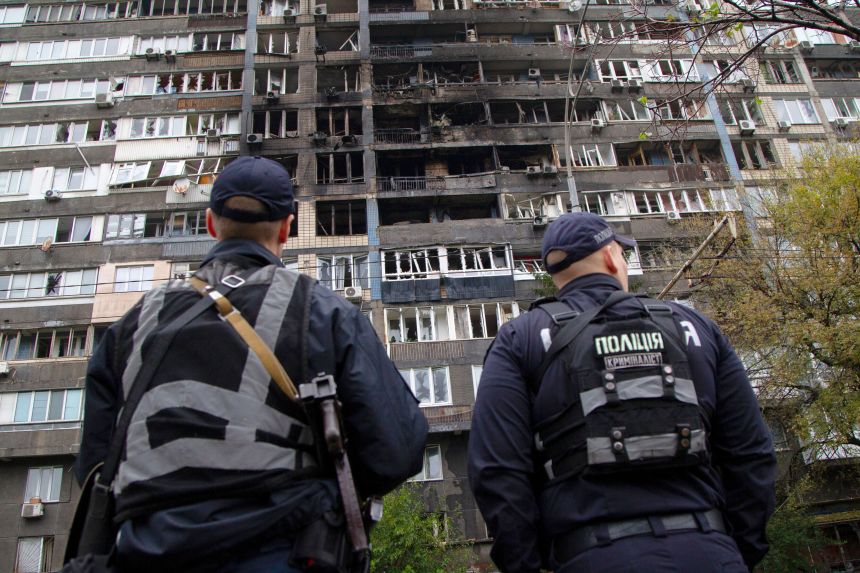
The aftermath of a Russian strike is seen on an apartment block in Kyiv’s Pecherskyi district on Friday. Kirill Chubotin/Ukrinform/Cover Images/AP
At least 12 people were injured in Kyiv during Friday’s attack, which had cut some power supplies, said the city’s Mayor Vitali Klitschko.
He said that the left bank of the capital was without power, with the city also reporting water supply issues.
Mykyta Varenya, a 26-year-old coffee shop owner from Kyiv, told CNN he had resorted to using a generator after the latest strikes. “The lights were out, there was no water, so I’m just getting by with a generator,” he said.
“Last year, it had a big impact (on my business). We had problems with the generator at first, gasoline is expensive, and roughly speaking, you end up breaking even, or even losing money with these outages.”

Coffee shop owner Mykyta Varenya, 26, fills his generator during a blackout in Kyiv on Friday. Kosta Gak/CNN
Pensioner Olena, 68, who only gave her first name, was one of the citizens who had queued up at a local shop to buy water after running water in her property was cut on Friday morning.
“There was no water or electricity in the morning,” she said. “Today’s outage was unexpected. But I went and got some (water). I had a little, so I got a little more. We’ll survive somehow.”
Video from Ukraine’s emergency service shows firefighters in Kyiv working to douse a massive blaze at a building site, and escorting residents to safety.
Ukraine’s largest private energy producer, DTEK Group, said Russia targeted its stations, injuring an energy worker and severely damaging equipment.
This is the third strike on DTEK’s facilities in one week, it said in a statement.
Ukraine’s Prime Minister Yulia Svyrydenko said Friday that repair crews were working in all regions to bring back power after the air raid alerts had finished. The water supply should be fully restored in Kyiv and Kirovohrad region by the end of the day, she added.
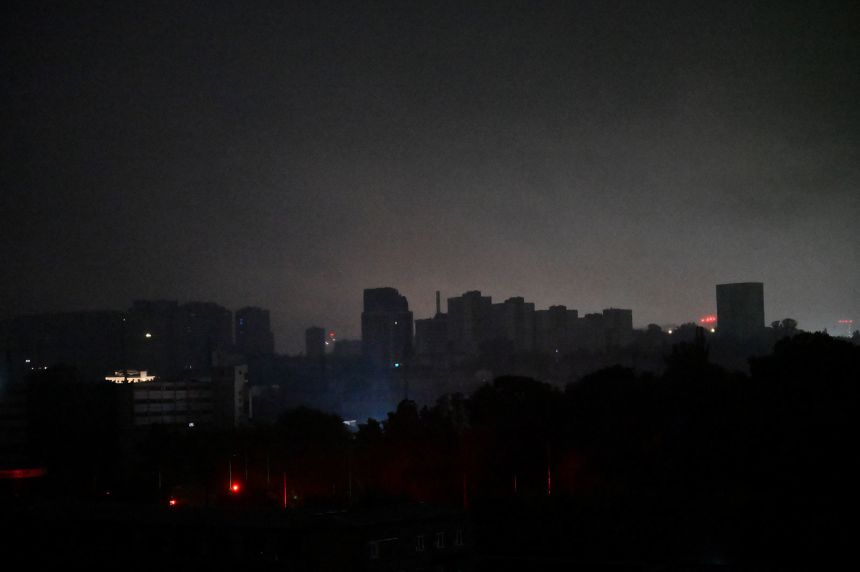
This photograph shows a view of Kyiv during a blackout following Russian drone and missile strikes on the Ukrainian capital on October 10, 2025. Sergei Supinsky/AFP/Getty Images
Svyrydenko said the attack had been one of the largest to specifically target energy infrastructure, and that a significant portion of the missiles fired had been ballistic missiles. “Unfortunately, there is significant damage to the energy infrastructure,” she said.
Four people were injured in the Dnipropetrovsk region, its governor Sehiy Lysak said, adding that 60 drones were intercepted over the region.
Last Christmas, half a million households were left without heating in the Kharkiv region in temperatures of 3 degrees Celsius (37 degrees Fahrenheit).
This is a developing story and will be updated.
. . .
“Major Russian strikes cut power in Kyiv and across Ukraine“, BBC News
Harry Sekulich and Jaroslav Lukiv
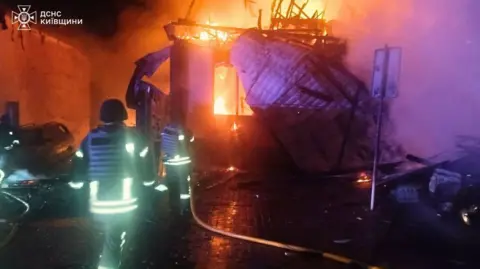
Kyiv’s authorities said power was later restored to more than 540,000 consumers in the city – but many households are still without electricity.
Twelve people were injured in the city, said Mayor Vitaliy Klitschko. In the southern Zaporizhzhia region, a seven-year-old boy was killed and seven others injured. Ten people were also injured in the central Cherkasy region.
Russia’s defence ministry said its “massive” strike with high-precision weapons – including hypersonic missiles – targeted energy facilities used by Ukraine’s “military-industrial complex”.
Russia – which launched a full-scale invasion of Ukraine in 2022 – has escalated attacks on Ukrainian energy facilities as well as transport infrastructure as winter approaches.
Reacting to the latest Russian strikes, Ukrainian President Volodymyr Zelensky reiterated calls for allies to act decisively to “defend people from this terror”.
“What’s needed is not empty words but decisive action – from the United States, Europe and the G7 – in delivering air defence systems and enforcing sanctions,” he wrote.
Zelensky said that more than 450 drones and over 30 missiles targeted Ukraine’s energy infrastructure, describing such attacks as “cynical and calculated” and against “everything that sustains normal life” as temperatures become colder.
More than 5,800 residential buildings in Kyiv were without electricity on Friday morning, local officials said. The city’s eastern districts were the worst hit.
Images of firefighters putting out blazes at a 10-storey building have been released by Ukraine’s state emergency services.
Residents in more than 7,000 buildings were left for hours without water – but the supplies were restored in the evening, the authorities said.
Public transport – including the capital’s widely used underground system – was also badly affected, with some stations forced to close after the Russian strikes.
So-called “invincibility” tents – where people can get hot water and charge their gadgets – have been set up on the streets of Kyiv and other cities.
Ukraine’s Energy Minister Svitlana Hrynchuk said Russia was “inflicting a massive strike” and repair crews were working to restore power.
“Exactly three years ago – to the day – on 10 October, our power system experienced one of the first massive attacks. Today, Russia continues to use cold and darkness as a tool of terror,” she said.
Ukrainian officials said they were forced to roll out emergency power outages in Kyiv and the capital region, as well as in the Sumy, Kharkiv, Poltava, Dnipropetrovsk, Donetsk, Kirovohrad and Zaporizhzhia regions.
On Thursday, Zelensky told reporters that Russia was intentionally trying to demolish the country’s energy grid, with attacks already disrupting gas facilities.
He said energy workers and authorities were bracing for further attacks.
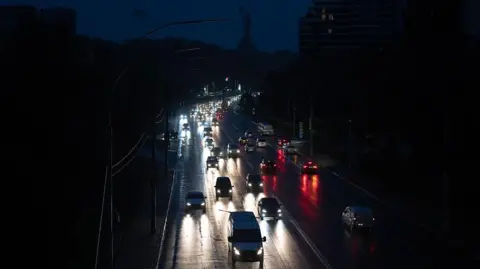 Vehicle lights illuminate a motorway in Kyiv during a partial blackout caused by Russian strikes / Bloomberg via Getty Images
. . .
“As Winter Nears, Russian Strikes on Ukraine’s Energy Grid Cause Blackouts”, The New York Times
Every fall since the war started in 2022, Russia has targeted electricity and heating infrastructure in an effort to weaken Ukrainians’ will to continue fighting.

Central Kyiv on Friday after a huge Russian missile and drone strike cut power to swathes of the city. It was the second large attack on Ukraine’s grid this week. Credit…Genya Savilov/Agence France-Presse — Getty Images
Reporting from Kyiv, Ukraine
Oct. 10, 2025
Every fall since Russia’s full-scale invasion in February 2022, Russian strikes have targeted electricity and central heating infrastructure before the onset of winter weather, as part of an effort to break Ukrainians’ will to continue their fight.
Ukraine has responded by beefing up air defenses, fortifying transformer stations with concrete barriers, diversifying energy sources with new wind and solar fields, and adding resilience to the grid with large backup batteries. Russia has adapted by honing its strategies to evade air defenses, sending combinations of drones and missiles in waves during attacks that last hours.
The barrage on Friday was the second large volley aimed at the electrical grid in a week.
Russia launched 450 drones and more than 30 missiles in the attack, which injured more than 20 people around Ukraine and killed a child in Zaporizhzhia, in the country’s south, President Volodymyr Zelensky said in a post on Telegram. The strike targeted infrastructure “that supports normal life, which Russians want to deprive us of,” he wrote.
Explosions and the rattle of air defense machine guns kept residents of Kyiv and other cities awake overnight. The energy minister, Svitlana Hrinchuk, wrote in a social media post that it was a “massive attack” on energy infrastructure.
Many of the districts in Kyiv on the eastern bank of the Dnipro River were without power on Friday morning, according to the city’s mayor, Vitali Klitschko. Waterworks were affected, with taps running dry in some neighborhoods.
Blackouts were also reported in Sumy, in the country’s north, and Dnipro, in central Ukraine, the local authorities said.
A drone or falling debris set on fire a 17-story high-rise in Kyiv, according to Mr. Klitschko, injuring nine people. Debris from intercepted Russian drones fell in the courtyards of apartment buildings in the Podil neighborhood of the capital.
This fall, Russia has also concentrated its fire on natural gas fields, pipes and pumping stations. Until January, Ukraine had transported Russian natural gas in pipelines across its country to customers in Europe, despite the war. It did so to avoid antagonizing Russia’s energy clients in Central Europe, the same countries Ukraine relied on for logistics in transporting weapons into the war zone.
Russia had refrained from striking gas infrastructure while this arrangement was in effect. But with no commercial interest left in preserving Ukraine’s gas pipelines, Russian forces have opened fire this fall. Ukraine’s state gas company reported the largest strike of the war on natural gas infrastructure last week.
In Washington, where President Trump was celebrating the cease-fire deal between Israel and Hamas, he said he now expected his administration to resolve the war in Ukraine. This week, Russian officials have declared recent U.S.-initiated peace talks to have hit a dead end, and Ukrainian officials have said that negotiations will not succeed without additional pressure on Russia.
Mr. Trump spoke at a meeting Thursday with the Finnish president, Alexander Stubb. Mr. Stubb said a settlement in Ukraine would be “the next big one.” Russia, Mr. Stubb said, was already weakened militarily and economically by the war.
Mr. Trump responded that he expected to broker an agreement. “We’re going to work it out,” he said.
Andrew E. Kramer is the Kyiv bureau chief for The Times, who has been covering the war in Ukraine since 2014.
Recent Posts
- “Trump Has Made the Epstein Saga a Case Study in Manipulation”, The New York Times
- “SA likely to support UN General Assembly resolution demanding Russia return abducted Ukrainian children”, The Daily Maverick
- “Honduran Drug Kingpin and Former President Walks Free After Trump Pardon”, National Review
- “Pete Hegseth’s Caribbean lawlessness”, The Washington Post
- “Pete Hegseth Needs to Go—Now”, The Atlantic
Archives
- December 2025
- November 2025
- October 2025
- September 2025
- August 2025
- July 2025
- June 2025
- May 2025
- April 2025
- March 2025
- February 2025
- January 2025
- December 2024
- November 2024
- October 2024
- September 2024
- August 2024
- July 2024
- June 2024
- May 2024
- April 2024
- March 2024
- February 2024
- January 2024
- December 2023
- November 2023
- October 2023
- September 2023
- August 2023
- July 2023
- June 2023
- May 2023
- April 2023
- March 2023
- February 2023
- January 2023
- December 2022
- November 2022
- October 2022
- September 2022
- August 2022
- July 2022
- June 2022
- May 2022
- April 2022
- March 2022
- February 2022
- January 2022
- December 2021
- November 2021
- October 2021
- September 2021
- August 2021
- July 2021
- June 2021
- May 2021
- April 2021
- March 2021
- February 2021
- January 2021
- December 2020
- November 2020
- October 2020
- September 2020
- August 2020
- July 2020
- June 2020
- May 2020
- April 2020
- March 2020
- February 2020
- January 2020
- December 2019
- November 2019
- October 2019
- September 2019
- August 2019
- July 2019
- June 2019
- May 2019
- April 2019
- March 2019
- February 2019
- January 2019
- December 2018
- November 2018
- October 2018
- September 2018
- August 2018
- July 2018
- June 2018
- May 2018
- April 2018
- March 2018
- February 2018
- January 2018
- December 2017
- November 2017
- October 2017
- September 2017
- August 2017
- July 2017
- June 2017
- May 2017
- April 2017